The Fascinating History of Milk Kefir

kefir history.png

Milk kefir is a fermented probiotic drink that is renowned for its healthful properties. Studies have shown that milk kefir is correlated with a wide range of health benefits, including improved digestion [1], lower blood pressure and cholesterol [2], cancer prevention [1], improved immune systems [3], and reduced asthma and allergies [2]. Milk kefir is a thick and slightly effervescent drink, with a sour, creamy taste.

Milk Kefir is Unique

Although there are many different types of fermented milk around the world [4], milk kefir is unique because it is made with kefir “grains.”  Kefir grains are not true grains, but are actually symbiotic colonies of bacteria and yeast in a protein and lipid matrix. Kefir grains resemble pieces of cauliflower, and they ferment the milk through breaking down the lactose into lactic acid and other beneficial components.

Milk kefir is now widely known and consumed in many countries throughout the world, but for many centuries, milk kefir was a closely-guarded secret of the Northern Caucasus region in Russia. The people of the Northern Caucasus region are renowned for their longevity, with one of the highest proportions of centenarians in the world. Milk kefir is a dietary staple in this region. 

Traditionally, milk kefir was made by combining fresh milk and kefir grains inside goatskin bags. During the daytime, the goatskin bags were hung in the sunshine of the doorways, and prodded or pushed by each person who went through the doorway. As the milk kefir was consumed, more fresh milk was added to the goatskin bag, forming a continuous fermentation cycle.

DSC09300.JPG

Grains of the Prophet

The people of the Caucasus mountains have been making kefir for hundreds (or even thousands) of years. In this region, kefir grains are known by the name “Grains of the Prophet” [5]. Their traditional legend about the origin of kefir grains is that the prophet Mohammed gifted kefir grains to the Orthodox Christians in this region [6]. Mohammed is said to have taught the people how to make kefir, and the people revered kefir as a health-promoting food.  

The kefir grains and methods for making kefir were kept secret by people in the Caucasus mountains for many generations. Owning kefir grains was equated with wealth in this region. The people believed that the benefits of kefir would somehow be diminished if the secrets of making kefir were shared outside of their region. Marco Polo is said to have tried kefir, and kefir was prized as a medicinal food, yet the keys to making kefir were not shared until the early 1900’s.

A True Tale of Deceit, Capture, and Retribution

Since milk kefir was a closely guarded secret, how did it ever become more widely known? This is where the story of milk kefir gets even more interesting.

The Russian immunologist Dr. Ilya Ilyich Metchnikoff (who received the Nobel Prize for his work on immunity in 1908) became interested in learning about the causes of the exceptional longevity of the people in the Caucasus region and other regions. Metchnikoff came to the conclusion that soured milk, including milk kefir, was one of the keys to longevity and well-being. Following the publication of Metchnikoff’s book, The Prolongation of Life, in 1907, the All Russian Physicians’ Society became determined to use milk kefir as a medicinal treatment for their patients.

Caucasus Region. Image from freeworldmaps.net

Caucasus Region. Image from freeworldmaps.net

The Blandov brothers, from Moscow Dairy, were commissioned by the All Russian Physicians’ Society to obtain kefir grains from the tribes in the Caucasus mountains. However, the tribes refused to sell any kefir grains to the Blandov brothers. Undaunted, the brothers came up with a scheme to obtain the kefir grains: they would send a beautiful woman to the court of tribal Prince Bek-Mirza Barchorov, and with her allure she would obtain the kefir grains. Irina Sakharova, an employee of the Blandov brothers, was chosen for this important mission [5].

Irina Sakharova and Prince Barchorov, 1908. Image from Revolution Fermentation

Irina Sakharova and Prince Barchorov, 1908. Image from Revolution Fermentation

Although Irina succeeded in attracting the interest of Prince Barcharov, he refused to give her any kefir grains. Irina departed from the Prince, but tribesmen were sent to capture her with the intention of forcing her to marry the Prince. The Blandov brothers mounted a rescue of Irina before the forced marriage could take place.

When Irina presented her grievance before the Czar, Prince Barcharov was ordered to make retribution to Irina. Although she was offered gold and jewels, Irina refused. She could only be compensated for what she had endured in one way: with kefir grains. The Czar ordered Prince Barcharov to give Irina 10 pounds of kefir grains!

Kefir as Medicine

Once the Blandov brothers had the milk kefir grains, they began making kefir for the All Russian Physicians’ Society. Kefir was used in Russian hospitals to treat a wide variety of conditions including digestive disorders, cancer, artherosclerosis, and tuberculosis [5]. Even now, kefir is routinely used for hospital patients, infants, and infirm people in Eastern Europe [7].

By the 1930’s, kefir was being produced on a large scale to meet widespread public demand in Russia. It took several decades for the commercial process of making kefir on a large scale to be perfected. Milk kefir was introduced to the western world by the 1960’s. Recently, milk kefir has become a much sought-after food with a rapidly growing global market.

Currently, many health-conscious consumers use kefir grains to easily produce their own milk kefir at home. Unlike the commercial kefir that was developed in Russia, most of the commercially-prepared kefir on the market today is made with direct-set powdered kefir cultures. These powdered cultures contain considerably fewer probiotic strains than kefir grains, but they produce a more consistent commercial product. From its ancient origins to today, milk kefir is a superfood that has enriched the health of humanity. 

References

[1] Zeynep B. Guzel-Seydim, Tugba Kok-Tas, Annel K. Greene & Atif C. Seydim. "Review: Functional Properties of Kefir." Critical Reviews in Food Science and Nutrition, 51:3, 261-268, 2011. doi: 10.1080/10408390903579029

[2] Bourrie, Benjamin C T et al. “The Microbiota and Health Promoting Characteristics of the Fermented Beverage Kefir.” Frontiers in microbiology vol. 7 647, 2016. doi:10.3389/fmicb.2016.00647

[3] de Oliveira Leite, Analy Machado et al. “Microbiological, technological and therapeutic properties of kefir: a natural probiotic beverage.” Brazilian journal of microbiology : [publication of the Brazilian Society for Microbiology] vol. 44,2 341-9, 2013. doi:10.1590/S1517-83822013000200001

[4] “Fermented milk products”, Wikipedia, Wikimedia Foundation, August 11 2020. https://en.wikipedia.org/wiki/Fermented_milk_products

[5] Shavit, E. “Renewed Interest in Kefir, the Ancient Elixir of Longevity.” Fungi, vol. 1-2, 2008. http://www.medicinabiomolecular.com.br/biblioteca/pdfs/Doencas/do-1175.pdf

[6] Seifi, P. “Magical Kefir.” Russian Life website, 2016. https://russianlife.com/stories/online/magical-kefir/

[7] Nielsen B, Gürakan GC, Unlü G. “Kefir: a multifaceted fermented dairy product.” Probiotics Antimicrob Proteins 6:123–135, 2014. https://pubmed.ncbi.nlm.nih.gov/25261107/ 

Facts Left Out of Raw Milk Discussions

Pasteurization has evoked a serious ‘blind spot’ among many journalists, scientists, and industry and professional organizations who believe that there is no ‘downside’ to pasteurizing milk.

Pasteurization is falsely perceived as a silver bullet, killing pathogens and causing no adverse effects. However, neither raw nor pasteurized milks are ‘risk-free’. Communications by pro-pasteurization advocates commonly leave out evidence, limitations, and inconvenient truths, in order to perpetuate pro-pasteurization myths and maintain status quo to preserve the dominance of pro-pasteurization ‘blind spots’. Beware of entrenched beliefs masquerading as scientific facts that in reality are not supported by scientific evidence.


FACTS LEFT OUT BY PRO-PASTEURIZATION ADVOCATES

Below are some relevant facts that are often left out of public communications about milk, each with supporting evidence and references that you are encouraged to review and fact-check.

1. Neither pasteurized nor raw milk is ‘risk-free’.

a. See Table below for summary of the burden of illness from CDC outbreak data for 2005-2020 and the peer-reviewed manuscript on this dataset (Stephenson, Coleman, and Azzolina 2024).

1b. FDA/FSIS assessed pasteurized milk as high risk of severe listeriosis per annum and unpasteurized milk as high risk per serving (FDA/FSIS, 2003); however no listeriosis outbreaks associated with raw milk were confirmed in the CDC dataset for 2005-2020 (Stephenson et al., 2024).

c. More deaths are reported from leafy greens (23), pasteurized milk (4), and oysters (2) than the death of an adult with severe underlying illness associated with consumption with raw milk (Davis et al. 2016). Note that another death in an adult with severe underlying illness reported in this time period could not be attributed to raw milk consumption.

d.  Higher burdens of illness are reported from leafy greens (16,434 illnesses), oysters (2,408), pasteurized milk (2,111), and many other foods than for raw milk (1,696).

2. Pasteurized milk is a highly processed food that is linked to adverse health effects.

a.  Significantly higher outbreaks, hospitalizations, and deaths were associated with listeriosis in pasteurized dairy from 2007-2020 compared to raw dairy (Sebastianski et al. 2022).

b.  Stillbirths, miscarriage, premature delivery were reported for pasteurized dairy, not raw dairy (Sebastianski et al. 2022).

c.   Heating milk (boiling and pasteurization) denatures milk proteins, increasing allergenicity and contributing to inflammatory disease (Abbring et al. 2019; 2020).

d.  Allergy to and intolerance of pasteurized milk is estimated to have a substantial public health burden in the US, with 30-37% intolerance of thermally treated milk from recent US surveys (C. M. Warren et al. 2022; C. Warren et al. 2024). Approximately 15 million US consumers (4.7% or nearly 1 in 20) are affected by thermally-treated/pasteurized milk.

e.  Industrial processing of milk (heating, filtration, pressure, drying, freezing) causes denaturing, aggregation, and loss of function of cow milk antigens (α-lactalbumin, β-lactoglobulin, serum albumin, caseins, bovine serum albumins, and others), reductions in concentrations of bioactives (immunoglobulins, cytokines, peptides, lipophilic components, and microbiota), and impairs immunologic tolerance mechanisms (Jensen et al., 2022).

3. Approximately 15 million raw milk consumers benefit from access.

a.  A recent government survey estimated 4.4% of US population consumes raw milk (Lando et al., 2022).

b.  Multiple sources report consumption of raw milk is increasing, not decreasing (NielsenIQ figures cited by (Aleccia 2024; Lyubomirova 2024); Figure below included in Coleman manuscript under review in Risk Analysis).

c.  CDC reported 1,696 raw milk illnesses for 2005-2020 (Stephenson et al., 2024) but not inflammatory disease (Dietert et al. 2022).

d.  Raw milk was tolerated by children with allergy to pasteurized milk, and pasteurized milk induced adverse effects (Abbring et al. 2019).

e.  Raw milk has a dense and diverse microbiota, similar to the breastmilk microbiota, both inducing benefits to gut microbiota, immune system function, and suppressing growth of pathogens (Coleman et al. 2021; Dietert et al. 2022; Coleman et al. 2023; Coleman, submitted).

f.   Raw milk was associated with increased functional richness of the gut microbiota (notably genus Lactobacillus and Lactococcus and the short chain fatty acid valerate) and participants with higher than median anxiety scores showed significant score reduction for stress and anxiety (Butler et al., 2020).

4. Illness associated with raw milk is not increasing in the US or any US state based on recent CDC data.

a.  No significant increase was reported for illnesses associated with raw milk outbreaks from 1998-2018 or numbers of outbreaks from 2005-2018 (Koski et al. 2022).

b.  No significant increase was reported for outbreaks or illnesses associated with raw milk, nor are rates by state increasing for any US state (Stephenson et al., 2024, Figures 12 and 13).

5. Regarding children, consuming raw milk complete with intact natural microbes (microbiota) is beneficial to health.

a.  Just as children benefit from raw breastmilk and its protective microbiota, children (and adults) also benefit from raw cow milk complete with its protective microbiota that enhance health of gut, immune, nervous, and respiratory systems (Coleman et al., 2021; Dietert et al., 2022).

b.  No child has died in the US from consuming raw milk in recent decades based on CDC data for 2005-2020 (Stephenson et al., 2024).

c.   Children with allergies to pasteurized milk tolerated raw milk consumption with no adverse effects while smaller volumes of pasteurized milk triggered adverse effects (Abbring, 2019).

d.  Children consuming raw milk in multiple large studies developed no diarrheal illness, significantly fewer respiratory and ear infections, protection from inflammatory disease including atopy, asthma, and eczema, and improved immunologic and lung function later in life (Perkin and Stranchan, 2006; Depner et al., 2013; Loss et al. 2015; von Mutius 2016; Wyss et al., 2018; Brick et al., 2020; Dietert et al. 2022).

6. Claims that raw milk is ‘inherently dangerous’ and that ‘risks exceed benefits’ are unfounded and not supported by the body of scientific evidence.

a.  Recent trends in unpasteurized fluid milk outbreaks, legalization, and consumption in the United States (Whitehead and Lake, 2018). CDC data from 2005-2016 documents 1,903 illnesses associated with pasteurized milk and 1,735 illnesses associated with raw milk. The rate of raw milk related outbreaks is decreasing, meanwhile the consumption of raw milk is increasing. The authors concluded that, “Controlling for growth in population and consumption, the outbreak rate has effectively decreased by 74% since 2005.” The study suggested that the improving food safety record is the result of expanded safety training for raw milk dairy producers.

b.  Examining Evidence of Benefits and Risks for Pasteurizing Donor Breastmilk (Coleman et al., 2021). Seventy-one studies were cited documenting evidence for benefits and risks of raw breastmilk for infants. Evidence of benefits was clear, convincing, and conclusive, while evidence for infectious disease risks to infants consuming raw breastmilk was limited. Supporting studies provided evidence of plausible mechanisms of benefits of ‘seeding and feeding’ the infant gut ecosystem, notably providing ‘colonization resistance’ or protection against pathogens and stimulating balanced development of infant immune systems.

c.   Nourishing the Human Holobiont to Reduce the Risk of Non-Communicable Diseases: A Cow’s Milk Evidence Map Example (Dietert et al., 2022). The study cited 135 studies illuminating raw bovine milk as a superfood complete with its natural microbiota intact and chosen by humans for 12,000 years. Study noted consistent evidence of raw bovine milk benefits (promotion of gut, immune, and lung health; protection from infectious diseases and non-communicable diseases) but limited evidence of risks of infectious disease.

d.  Trends in Burdens of Disease by Transmission Source (USA, 2005–2020) and Hazard Identification for Foods: Focus on Milkborne Disease (Stephenson et al., 2024). The study assessed trends for CDC data from all transmission sources for 2005-2020 and found that the burden of illness and mortality was dominated by person-to-person transmission. Foodborne disease accounted for 21% of the disease burden with no increasing trend. Foods representing the greatest hazards were identified for campylobacteriosis (pasteurized and raw milk), illness from Shiga toxigenic E. coli (leafy green vegetables and beef), listeriosis (melons and pasteurized solid dairy products), and salmonellosis (poultry and leafy vegetables). Fatal foodborne disease was dominated by fruits, vegetables, peanut butter, and pasteurized dairy. No increasing trend of raw milk illnesses were observed overall or for any state, nor did rates of illness increase after legislation to allow greater access to raw milk.


This is an excerpt from Peg Coleman’s article, “'Dread Reckoning' And 'Blind Spots' for Oral Transmission of H5N1”. Peg Coleman is a medical microbiologist, microbial risk analyst, and a Fellow of the Society for Risk Analysis. Peg Coleman is on the Advisory Board for Raw Milk Institute. You can view Peg’s full article here: https://www.colemanscientific.org/blog/2025/5/21/dread-reckoning-and-blind-spots-for-oral-transmission-of-h5n1

References

1.      Abbring, Suzanne, Daniel Kusche, Thomas C. Roos, Mara A. P. Diks, Gert Hols, Johan Garssen, Ton Baars, and Betty C. A. M. van Esch. 2019. “Milk Processing Increases the Allergenicity of Cow’s Milk-Preclinical Evidence Supported by a Human Proof-of-Concept Provocation Pilot.” Clinical and Experimental Allergy: Journal of the British Society for Allergy and Clinical Immunology 49 (7): 1013–25. https://doi.org/10.1111/cea.13399

2.      Abbring, Suzanne, Ling Xiong, Mara A. P. Diks, Ton Baars, Johan Garssen, Kasper Hettinga, and Betty C. A. M. van Esch. 2020. “Loss of Allergy-Protective Capacity of Raw Cow’s Milk after Heat Treatment Coincides with Loss of Immunologically Active Whey Proteins.” Food & Function 11 (6): 4982–93. https://doi.org/10.1039/d0fo01175d

3.      Aleccia, JoNel. 2024. “Raw Milk Sales Are up despite Bird Flu Outbreak in Dairy Cows.” Fast Company. May 14, 2024. https://www.fastcompany.com/91124899/raw-milk-sales-rise-bird-flu-outbreak-dairy-cows

4.      Brick T, Hettinga K, Kirchner B, Pfaffl MW, Ege MJ. 2020. The beneficial effect of farm milk consumption on asthma, allergies, and infections: from meta-analysis of evidence to clinical trial. The Journal of Allergy and Clinical Immunology: In Practice 8:878–889 DOI 10.1016/j.jaip.2019.11.017

5.      Butler MI, Bastiaanssen TF, Long-Smith C, Berding K, Morkl S, Cusack AM, Strain C, Porteous-Allen P, Claesson MJ, Stanton C, Cryan JF. 2020. Recipe for a healthy gut: intake of unpasteurised milk is associated with increased lactobacillus abundance in the human gut microbiome. Nutrients 12(5):1468 DOI 10.3390/nu12051468

6.  Coleman, M. E., T. P. Oscar, T. L. Negley, and M. M. Stephenson. 2023. “Suppression of Pathogens in Properly Refrigerated Raw Milk.” PLOS ONE 18 (12): e0289249. https://doi.org/10.1371/journal.pone.0289249

7.  Coleman, Margaret E., D. Warner North, Rodney R. Dietert, and Michele M. Stephenson. 2021. “Examining Evidence of Benefits and Risks for Pasteurizing Donor Breastmilk.” Applied Microbiology 1 (3): 408–25. https://doi.org/10.3390/applmicrobiol1030027

8.  Davis, Kenneth R., Angela C. Dunn, Cindy Burnett, Laine McCullough, Melissa Dimond, Jenni Wagner, Lori Smith, Amy Carter, Sarah Willardson, and Allyn K. Nakashima. 2016. “Campylobacter Jejuni Infections Associated with Raw Milk Consumption—Utah, 2014.” Morbidity and Mortality Weekly Report 65 (12): 301–5.

9.  Depner M, Ege MJ, Genuneit J, Pekkanen J, Roponen M, Hirvonen M-R, Dalphin J-C, Kaulek V, Krauss-Etschmann S, Riedler J. 2013. Atopic sensitization in the first year of life. Journal of Allergy and Clinical Immunology 131:781–788 DOI 10.1016/j.jaci.2012.11.048

10.  Dietert, Rodney R., Margaret E. Coleman, D. Warner North, and Michele M. Stephenson. 2022. “Nourishing the Human Holobiont to Reduce the Risk of Non-Communicable Diseases: A Cow’s Milk Evidence Map Example.” Applied Microbiology 2 (1): 25–52. https://doi.org/10.3390/applmicrobiol2010003

11. FDA/FSIS. 2003. Quantitative assessment of relative risk to public health from foodborne Listeria monocytogenes among selected categories of ready-to-eat foods. Available at: http://www.fda.gov/downloads/Food/FoodScienceResearch/UCM197330.pdf

12. Jensen SA, Fiocchi A, Baars T, Jordakieva G, Nowak-Wegrzyn A, Pali-Schöll I, Passanisi S, Pranger CL, Roth-Walter F, Takkinen K, Assa'ad AH, Venter C, Jensen-Jarolim E; WAO DRACMA guideline group. 2022. Diagnosis and Rationale for Action against Cow's Milk Allergy (DRACMA) Guidelines update - III - Cow's milk allergens and mechanisms triggering immune activation. World Allergy Organ J. 15(9):100668. doi: 10.1016/j.waojou.2022.100668. PMID: 36185551; PMCID: PMC9483786.

13.  Koski, Lia, Hannah Kisselburgh, Lisa Landsman, Rachel Hulkower, Mara Howard-Williams, Zainab Salah, Sunkyung Kim, Beau B. Bruce, Michael C. Bazaco, and Michael B. Batz. 2022. “Foodborne Illness Outbreaks Linked to Unpasteurised Milk and Relationship to Changes in State Laws–United States, 1998–2018.” Epidemiology & Infection 150:e183.

14. Lando, A.M., Bazaco, M.C., Parker, C.C. and Ferguson, M., 2022. Characteristics of US Consumers reporting past year intake of raw (Unpasteurized) milk: results from the 2016 food safety survey and 2019 food safety and nutrition survey. Journal of food protection, 85(7), pp.1036-1043.

15.  Loss, Georg, Martin Depner, Laurien H. Ulfman, R.J. Joost van Neerven, Alexander J. Hose, Jon Genuneit, Anne M. Karvonen, et al. 2015. “Consumption of Unprocessed Cow’s Milk Protects Infants from Common Respiratory Infections.” Journal of Allergy and Clinical Immunology 135 (1): 56-62.e2. https://doi.org/10.1016/j.jaci.2014.08.044

16.  Lyubomirova, Teodora. 2024. “Bird Flu Latest: FDA Raises Raw Milk Risks Awareness, Studies Pasteurization Effectiveness.” Dairyreporter.Com. June 26, 2024. https://www.dairyreporter.com/Article/2024/06/26/FDA-tells-consumers-to-know-the-risks-of-raw-milk

17.  Mutius, Erika von. 2016. “The Microbial Environment and Its Influence on Asthma Prevention in Early Life.” The Journal of Allergy and Clinical Immunology 137 (3): 680–89. https://doi.org/10.1016/j.jaci.2015.12.1301

18.  Perkin, M.R. and Strachan, D.P., 2006. Which aspects of the farming lifestyle explain the inverse association with childhood allergy?. Journal of Allergy and clinical Immunology, 117(6), pp.1374-1381.

19. Whitehead, J. and Lake, B., 2018. Recent trends in unpasteurized fluid milk outbreaks, legalization, and consumption in the United States. PLoS Currents, 10, pp.ecurrents-outbreaks.

20.  Wyss AB, House JS, Hoppin JA, Richards M, Hankinson JL, Long S, Henneberger PK, Freeman LEB, Sandler DP, O’Connell EL. 2018. Raw milk consumption and other early-life farm exposures and adult pulmonary function in the Agricultural Lung Health Study. Thorax 73:279–282 DOI 10.1136/thoraxjnl-2017-210031.

21.  Sebastianski, Meghan, Natalie A. Bridger, Robin M. Featherstone, and Joan L. Robinson. 2022. “Disease Outbreaks Linked to Pasteurized and Unpasteurized Dairy Products in Canada and the United States: A Systematic Review.” Canadian Journal of Public Health 113 (4): 569–78. https://doi.org/10.17269/s41997-022-00614-y

22.  Stephenson, Michele M., Margaret E. Coleman, and Nicholas A. Azzolina. 2024. “Trends in Burdens of Disease by Transmission Source (USA, 2005–2020) and Hazard Identification for Foods: Focus on Milkborne Disease.” Journal of Epidemiology and Global Health, March. https://doi.org/10.1007/s44197-024-00216-6

23.  Warren, Christopher, Ruchi Gupta, Arpamas Seetasith, Robert Schuldt, Rongrong Wang, Ahmar Iqbal, Sachin Gupta, and Thomas B. Casale. 2024. “The Clinical Burden of Food Allergies: Insights from the Food Allergy Research & Education (FARE) Patient Registry.” World Allergy Organization Journal 17 (3): 100889. https://doi.org/10.1016/j.waojou.2024.100889

24.  Warren, Christopher M., Avni Agrawal, Divya Gandhi, and Ruchi S. Gupta. 2022. “The US Population-Level Burden of Cow’s Milk Allergy.” The World Allergy Organization Journal 15 (4): 100644. https://doi.org/10.1016/j.waojou.2022.100644

Soil Fertility and Pastures for High Quality Raw Milk

Feeding dairy animals on green sunny pastures is the preferred way to produce raw milk.  Paddock rotations that provide a daily cycle of movement to fresh, sunny, green pastures provides an ideal environment for keeping dairy animals healthy, clean, and producing high-quality raw milk.  In many cases when dairy farmers transition from an industrial confinement feeding model to a pasture-based feeding system, they are pleased to find that animal health often improves.  

soil3.png

Soil fertility and rotational grazing are of prime importance to pasture management.  Fertile soil is the main source for minerals taken up by the forage plants which dairy animals graze upon.  Soils supplied with calcium and phosphorus fortify milk with these minerals which are needed by people to build strong bones.     

Besides soil being a source for mineral enrichment of milk, a substantial body of scientific literature reports that milk produced by animals on pasture has enhanced nutritional properties compared to milk produced by confinement operations.  Milk produced during the grazing season has a more favorable ratio of omega-3 to omega-6 fatty acids.  Pasture raised milk also has higher levels of conjugated linoleic acid and fat-soluble vitamins that are beneficial to human nutrition.      

Whether soil fertility is managed or neglected can also influence the health of dairy animals.  Sometimes pasture lands are neglected and not managed to optimize soil fertility, forage quality, and health and productivity of grazing animals.  For example, an imbalance of the minerals calcium, magnesium, and potassium in soils can put animal health at risk.  When soil pH management and liming are neglected weedy plant species may be favored over the more nutritious leguminous forage species preferred by dairy cows.     

OPDC.jpg

To produce raw milk of the highest quality, producers should make observations as they walk over the pastures grazed by dairy animals.  In weedy pastures where more desirable forage species are failing to thrive, it may be a sign of poor soil fertility or other mismanagement.  Soil sampling and testing for soil fertility status can be performed to help diagnose reasons for poor pasture performance.  Even on seemingly well performing pastures, regular soil fertility sampling and testing should be done about every three years to monitor soil pH and fertility status. 

Soil Fertility Recommendations for Pastures is available online from Rutgers University, New Jersey Agriculture Research Station (E364 Soil Fertility Recommendations for Pastures. Heckman, J. https://njaes.rutgers.edu/e364 ).  Although this publication was specifically designed for New Jersey much of the information is universal.  The main soil fertility guidelines are most applicable to Eastern and Midwestern states. Higher levels of precipitation in the Eastern states cause nutrients to leach and acidify the soil.  This increases the need to apply limestone more frequently. 

In other regions, soil fertility needs, and testing procedures may be different and based on the local geological and climatic conditions.  For instance, soils in the arid Southwest tend to be alkaline and as such the pastures may benefit from acidifying soil amendments. Also, different climatic regions may grow different forage species.  To account for regional differences, farmers should consult with local expertise for soil fertility recommendations. 

In summary, producers of fresh unprocessed milk are encouraged to make the best use of pastures as a major feed source during the grazing season.  When the soil fertility conditions are optimized for the health and productivity of dairy animals, farmers will be able to provide customers with nutritious dairy products of the highest quality.              

Udder Preparation for Raw Milk, including 3 Videos from RAWMI Listed Farms

Raw milk that is carefully and intentionally produced for direct human consumption is a low-risk food.  Udder preparation is one of the most important steps for producing clean, safe raw milk. If you don’t properly clean the udders and teats, dirt and manure contamination can contribute pathogenic bacteria into the milk. With proper cleaning and preparation of the udders and teats, the risk of pathogenic bacteria in the milk is dramatically reduced.

Manage the Environment

Got dirty, muddy udders? If so, that’s a sign that your farm conditions have some room for improvement. If you manage the farm environment properly, that will go a long way towards ensuring that your animals’ udders are fairly clean before even stepping into the milking parlor. The following are some important environmental factors to manage.

Clean and Dry Resting Places

If your animals are given a relatively clean and dry place to rest, they will be less likely to get filthy on a regular basis. Your individual farm will have its own unique challenges depending on the weather and landscape. Winter and rainy seasons can be the most challenging times to ensure the animals are staying relatively clean. Some examples of optimal resting areas are well-managed rotational pastures, compost bed packs in the barn, or other areas that are high, dry, and shaded.

Calves and Kids

Be aware that your animals’ offspring (calves, kids, etc.) can be a source of pathogens. Just like human babies, these animal babies explore the world with their mouths and can then directly transfer harmful bacteria to the udders. Animal babies have immature immune systems and are also more likely to harbor pathogens themselves. For low-risk raw milk production, ideally the calves/kids will be bottlefed and not allowed access to their mother’s udders. Please see this article for more information on managing the risks of calf-sharing. 

Chickens, Pigs, and Other Livestock

Poultry and livestock on the farm can be sources of pathogens as well.  For instance, if a cow lies down in a pasture with fresh chicken manure, her udders can become contaminated with salmonella or campylobacter pathogens. Ideally, the milk animals should be kept separately from other animals to reduce the pathogen risk.

Poultry should not be allowed into the milking parlor. Some raw milk farms choose to purposely rotate their chickens through the pastures after the cows/goats have moved through the pasture to ensure they are not sharing the space simultaneously.  If your chickens do share pastures with your milk animals, extra care will need to be taken to ensure the udders are properly cleaned before milking.    

Hair Management

Depending on the animal, there may be excess hair around the udders and teats. This hair can make it more difficult to properly clean the area before milking.  Regularly trimming the hair is one method for ensuring that proper cleaning can be achieved.

Additionally, the long tails on cows can become a source of contamination during milking when the cow switches her tail. Trimming the hair at the end of the tail is a good method for reducing this risk.  

Manure Management

Manure in the milking parlor can become a source of pathogen contamination, especially for cows which have much messier manure than goats and sheep. The milking parlor should be cleaned of manure on a daily basis before, during, and after milking. Giving cows a brief standing period or walk before leading them into the milking parlor is another method for reducing the amount of manure in the milking parlor.

Udder Preparation

The end goal of udder preparation is for the teats and udder to be clean and dry at the time of milking. A basic procedure to achieve this is as follows.

1.       Clean the udder and teats with a moist cloth

2.       Pre-dip each teat in an iodine- or hydrogen peroxide-based teat dip

3.       Wipe off the teat dip

4.       Strip each teat and inspect the milk

5.       Apply the milking machine

6.       After milking, apply iodine-based post-dip to each teat

Each farm has its own unique challenges. There is no one procedure that will work perfectly for all farmers at all times. Here are some specific pointers that may help you in developing your own best udder preparation procedures.

IMG_8256_1.jpg

Clean the Udder and Teats

If the udder and teats are very dirty, such as caked with mud or manure, you may need to do a wet soapy wash of the area first. There is no need to wet down the whole animal, as that will make it more likely for contamination to drip down onto the udders. Remember that wetness will allow bacteria to migrate from one area to another, and any bacteria is likely to end up at the low point which is the teats. If you must wash the udder and teats, make sure to dry them well before proceeding with the damp cloth wiping steps below. 

If the environment has been managed well, the udder and teats will probably be relatively clean when the animal enters the milking parlor. Use a clean, damp cloth to wipe off the teats and udder. Use a clean part of the cloth for each teat, making sure to wipe from the teats outward, so that the teats are the cleanest parts. Using white cloths will allow you to easily see whether there is still any dirt or filth coming off the teats/udder.

Make sure to use a new cloth for each animal, and you may need to use multiple cloths per animal to make sure the teats are well-cleaned. Have a separate bucket to place the soiled cloths into, so they don’t contaminate the clean cloths.

udder wiping.png

Pre-dip Teats in Iodine- or Hydrogen Peroxide-Based Teat Dip

After cleaning the udder and teats, pre-dip the teats. Both iodine and hydrogen peroxide-based teat dips are approved for organic milk production.

Iodine-based teat dips have been used successfully since the 1960’s and have a longer shelf life than hydrogen peroxide-based dips. Because iodine-based teat dips have a thicker consistency, care needs to be taken to ensure that the pre-dip is properly wiped off before milking. Iodine-based teat dips are currently quite expensive.

Hydrogen peroxide-based teat dips are much less expensive than iodine-based dips, but they also have somewhat less effectiveness in preventing mastitis. Hydrogen peroxide-based teat dips have a thinner consistency and thus can work well in spray applications. Care needs to be taken to ensure that the spray is applied to all sides of the teats.

Make sure to leave the pre-dip on for at least 30 seconds so that it has appropriate time to sanitize the teats. Beware not to dip dirty udders into your teat dip, else you may end up contaminating the whole cup! 

Once the teat dip has been on for at least 30 seconds, wipe off the teat dip with a clean, dry cloth.

Dip Then Strip, or Strip Then Dip?

It does not appear to matter whether you strip the teats and then pre-dip, or dip first and then strip the teats. Data from the National Mastitis Council has shown that there is “no significant difference in the monthly rate of clinical mastitis, new subclinical cases or milk per cow per day" whether the teats are stripped-then-dipped or dipped-then-stripped. Either way, the important thing is to build consistency and stick with your procedures. 

Strip Each Teat and Inspect the Milk

Using clean or gloved hands, manually strip a few squirts of milk out of each teat. This is important for ensuring that any bacteria or contamination in the teat canal is ejected prior to milking. Inspect the milk for any signs of coagulation, stringiness, blood, etc. If there is anything abnormal, the milk is best discarded or used for some other purpose rather than direct human consumption.

IMG_8086.jpg

Apply the Milking Machine

Once the teats have been cleaned, dipped, stripped, and dried, you are ready to apply the milking machine. Make sure the area under the cow/goat is clean so no contamination will get sucked up into the milking claw as it is being applied and removed. Manage the milk claws such that they never touch the ground, and are quickly applied to the teats once the vacuum is turned on.

After Milking, Apply Iodine-Based Post-Dip

Once the milking is done, apply an iodine-based post-dip to the teats. Post dip formulations are generally thicker than pre-dips; the thicker formulation helps to seal the teat orifice against bacteria. Try to ensure that the animals remain standing for at least 30 minutes after applying the post-dip; this will allow the dip to fully dry before there is any potential contamination from lying down.

DSC_0107.jpg

Three Example Udder Prep Videos

Here are three videos of udder preparation at RAWMI Listed Farms, so you can see some of the principles of proper udder preparation in action. Remember that each farm is unique, and there is no single procedure that will work perfectly for all farmers at all times.

Welcoming Seven Farms in Idaho, Tennessee, Missouri, Oregon, and Nebraska to RAWMI Community

The Raw Milk Institute (RAWMI) sends a warm welcome to seven more farmers who have completed our Listing program!

RAWMI offers free mentoring to all dairy farmers. Whether they are milking one cow, a handful of goats, or a large herd, the principles of safe raw milk production form a foundational toolset that benefits all dairy farmers and their customers. 

Some of the farmers we mentor choose to keep it casual, and are satisfied to just ask us a few questions before continuing their raw milk journeys. There is another set of farmers, though, that is not content to just dip their toes in the water; they want to dive right in and take their entire milk process to the next level. 

For these farmers, we offer our (free) RAWMI Listing program, wherein we assist farmers in developing their own unique on-farm Risk Analysis and Management Plan, documenting their processes with written Standard Sanitary Operating Procedures, and identifying the Critical Control Points that are essential to their production of safe raw milk. RAWMI Listed farmers test their milk at least monthly for ongoing assurance that their processes are working well to produce low-risk raw milk. RAWMI Listing is the gold standard for raw milk producers.

Seven raw milk farms have recently completed the RAWMI Listing process, and we extend them a warm welcome into our growing community!

  • Bells Bend Farms - Nashville TN

  • Canaan Farm - Elk Creek MO

  • Mini Mosaic Acre - Koshkonong MO

  • Mountain Heritage Farm - Woodbury TN

  • Raising Arrows Creamery - Bridgeport NE

  • Raspberry Lane Ranch - Kuna ID

  • Westerlook Farm - Carlton OR

Bells Bend Farms - Nashville TN

Bells Bend Farms is a small family farm consisting of 40 acres that include both cropland and rolling pastures. For over 15 years, they have grown organic vegetables for their community-supported agriculture (CSA) program and for the past 9 years they have provided raw milk for their community, utilizing regenerative farming practices. What began as a single cow for their family's needs has grown into a thriving community offering. 

Bells Bend Farms has a small herd of Jersey cows focusing on old-world genetics, improving their herd’s ability to convert grass into rich nutritious milk with every generation. Their cows are rotationally grazed on carefully managed pastures throughout the year, ensuring optimal health and well-being for their cows and land.

You can check out Bells Bend Farms’ Risk Management Plan and test results here: https://www.rawmilkinstitute.org/listed-farmers/#bells

Canaan Farm - Elk Creek MO

Canaan Farm is located in the Missouri Ozarks, in Elk Creek. After serving in the military, their family ended up in Missouri to live closer to family. They immediately fell in love with farm life, especially cows. They have a passion for serving, for providing, and for leading a simple way of life. They believe God has provided well, and now especially with cows, they diligently strive to be good stewards of what God has provided by taking the best possible care of their animals. It is their mission to share the blessings of God by providing wholesome farmstead raw dairy products for the community.

You can check out Canaan Farm’s Risk Management Plan and test results here: https://www.rawmilkinstitute.org/listed-farmers/#canaan

Mini Mosaic Acre - Koshkonong MO

The description of this little farm is wrapped up in their name, Mini Mosaic Acre.

  • MINI- They raise and milk outstanding Miniature Jersey Cows and are committed to improving the genetics for this incredible little breed.  

  • MOSAIC- They are a family composed of many broken pieces who were placed together through adoption, creating the beautiful picture of their lives within their family and their community. 

  • ACRE- Years and years ago, when their farm began, they struck forward towards their dream with less than two acres of land.  

Mini Mosaic Acre has grown to 27 acres which are rotationally grazed. Their passion for real food stems out of necessity. Several of their adopted children were born with disabilities or had significant health problems. They grew to truly understand the importance of quality raw dairy when they adopted a “failure to thrive” infant, who was severely malnourished and could not keep formula down. They switched him to raw milk formula and watched him flourish. They are believers in the power of raw milk and love to share it with others.

You can check out Mini Mosaic Acre’s Risk Management Plan and test results here: https://www.rawmilkinstitute.org/listed-farmers/#mini

Mountain Heritage Farm - Woodbury TN

Established in 1995, Mountain Heritage farm is a micro dairy serving the eastern Middle-Tennessee area.  Their herd of registered Irish Dexter cattle are raised in a holistic environment, grazing over 30 acres of pastures year round.  This dual purpose breed provides the richest, creamiest milk from heritage breed cows that average only 700 pounds.  While the ladies are “mostly grass fed” they do get a treat during milking that supports their milk production and body condition.  As much as possible, Mountain Heritage Farm chooses non-GMO and organic feeds for the milkers.  Raw milk safety is of utmost importance which is why the milk from their herd is routinely tested in their on farm lab to ensure consistently low bacteria counts.

You can check out Mountain Heritage Farm’s Risk Management Plan and test results here: https://www.rawmilkinstitute.org/listed-farmers/#mountain

Raising Arrows Creamery - Bridgeport NE

Raising Arrows is a family run micro dairy, and all four of their kids enjoy helping where and however they can. Raising Arrows is committed to producing clean and safe raw goat milk, raw cow milk, fermented dairy products, and raw milk cheeses.

They believe in stewarding the animals to the best of their abilities, treating the animals with dignity and respect, while benefiting from the abundant milk. Raising Arrows strives to raise their goats and cows as close to natural as possible, so they let the cows and goats raise their own babies.  

The seeds for Raising Arrows began in 2011, when their oldest child was diagnosed with a severe cows’ milk protein intolerance. They switched their daughter from formula to raw goat milk at a very young age and experienced an immediate, overnight change in her demeanor. Their very young infant went from screaming and being uncomfortable all the time, to sleeping and being a happy baby. Goat milk was the answer they had been looking for, so they bought a goat for her needs… and then some more goats.

What began as a necessity for their daughter grew into a passion for providing clean and nutritious raw goat milk to other parents that are experiencing the same thing.  Raising Arrows has since added jersey cows to the milking lineup.

You can check out Raising Arrows Creamery’s Risk Management Plan and test results here: https://www.rawmilkinstitute.org/listed-farmers/#arrows

Raspberry Lane Ranch - Kuna ID

At Raspberry Lane Ranch, they believe that happiness just tastes better. Their journey started with a simple goal: to provide their family with the most natural, high-quality food possible. That passion grew into a thriving raw dairy farm, where they share the same nutritious, pasture-raised products with their community.

Raspberry Lane Ranch’s cows enjoy fresh pasture, quality hay, and carefully selected supplemental feed to ensure their health and well-being year-round. They prioritize sustainable farming practices, transparency, and a deep respect for nature, ensuring their milk is as pure and wholesome as possible.

You can check out Raspberry Lane Ranch’s Risk Management Plan and test results here: https://www.rawmilkinstitute.org/listed-farmers/#raspberry

Westerlook Farm - Carlton OR

Westerlook Farm, built in 1911, sits on the edge of town and is owned and operated by Matt and Darci Haney.  They have a small grass fed Jersey milk cow herd, and offer raw milk through herd shares. Matt and Darci purchased Westerlook Farm in late 2018.  They purchased their first A2A2 Jersey cow in 2020, and over the last five years they have continued to improve their equipment, barn, herd and milk quality.  They started their raw milk herd share in 2024.  

Along with their two young daughters, the Haneys are passionate about country living and producing wholesome, and delicious raw milk for their family and their community.  They strive to provide the best care and nutrition for their animals, with the belief, and evidence, that a well cared for animal will be healthier and provide a superiorly nutritious product.  In addition to raw milk, they also produce grass fed beef, and sell mini Hereford and mini Jersey breeding stock.

You can check out Westerlook Farm’s Risk Management Plan and test results here: https://www.rawmilkinstitute.org/listed-farmers/#westerlook

10 Important Facts about Raw Milk and H5N1 Avian Flu

Let's cut through the media hype. Here's what you need to know about raw milk and avian influenza (also known as H5N1, bird flu, or HPAI).

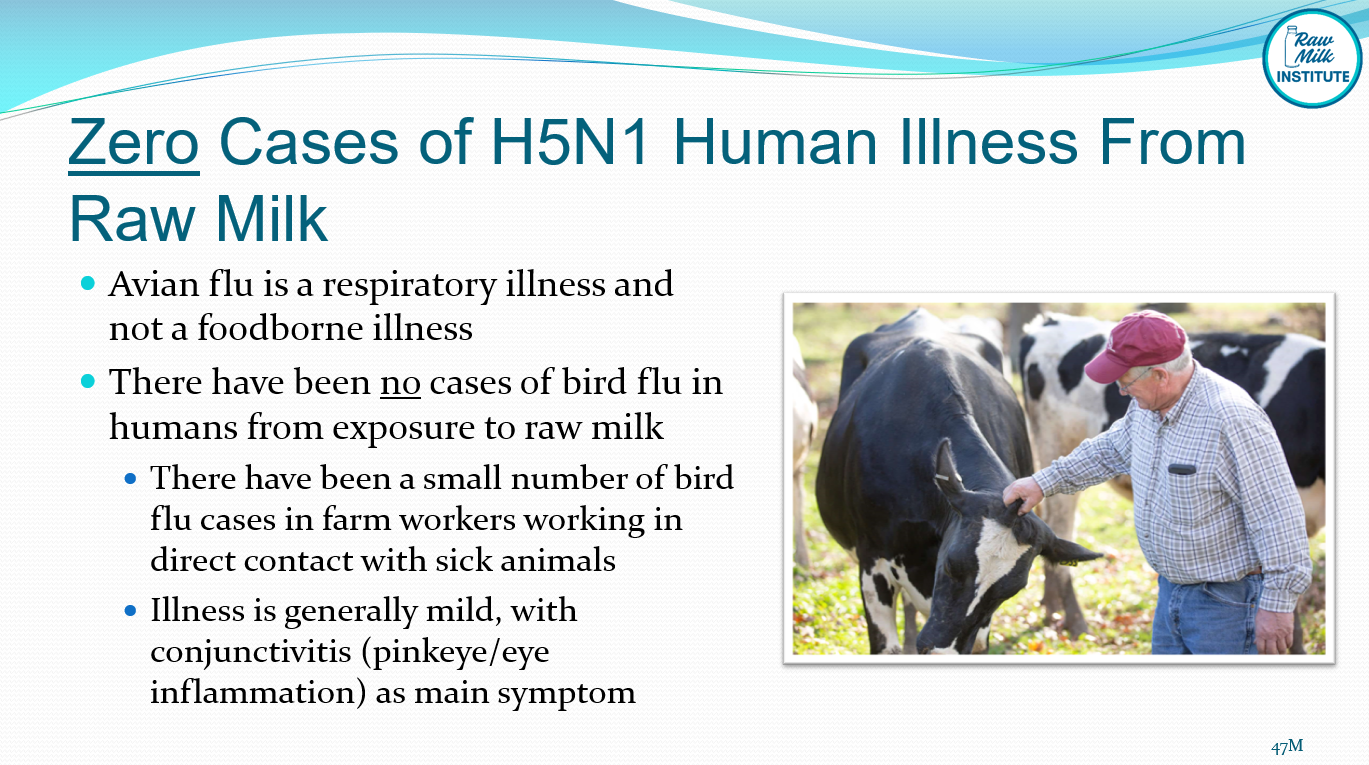
  1. Avian flu is a respiratory illness and NOT a foodborne illness.

  2. There have been NO known cases of bird flu in humans from drinking raw milk.

  3. There have been a small number of bird flu cases in farm workers working in direct contact with sick animals. Illness is generally mild, with conjunctivitis (pinkeye/eye inflammation) as main symptom.

  4. In cattle, this illness is generally mild. Most of herd shows no signs of illness.

  5. Ill cattle generally recover within a couple weeks. First symptom in cows is generally fever a few days prior to becoming clinically sick.

  6. Symptoms include weakness, diarrhea, fever, lower milk production, poor appetite, and yellow-tinged, thick milk. Rarely, cattle can die from HPAI.

  7. Affected cows respond well to drenching treatment with 5 gallons of water, antipyretic, probiotics, and a gut stimulant (i.e. yeast) for a few days.

  8. HPAI directly affects the udder and milk production. Recovering animals may not fully regain milk production until next lactation.

  9. In general, a dairy will move through bird flu and achieve “herd immunity” in ~6 weeks from start to finish.

  10. Common sense precautions, just as for all other illnesses: Monitor your herd for illness. Quarantine animals who are ill and ensure that milk from unhealthy animals is NOT used for direct human consumption. Quarantine any new animals brought onto the farm to ensure they are healthy before joining the herd.

Here are some references for more detailed information:

  • https://www.rawmilkinstitute.org/updates/h5n1-avian-flu-and-raw-milk-where-is-the-evidence

  • https://www.colemanscientific.org/blog/2025/1/30/more-on-h5n1-and-cats-the-case-for-worrying

  • https://www.nature.com/articles/s41586-024-08166-6

  • https://pubs.acs.org/doi/full/10.1021/acs.estlett.4c00971

Advocating and Training for World-Class, Low-Risk Raw Milk for Pennsylvania, Delaware, and Beyond

Raw Milk Institute (RAWMI) recently traveled to Pennsylvania and Delaware in support of low-risk raw milk. Through training farmers, meeting with regulators, and visiting farms, we’re aiming to help ensure that raw milk is safe, embraced, and accessible in the northeastern states. 

BUILDING BRIDGES WITH REGULATORS AND FARMERS IN DELAWARE

RAWMI President Mark McAfee and Vice President Sarah Smith met with Delaware Secretary of Agriculture Don Clifton, alongside dairy farmers Steph and Gregg Knudsen, to discuss Delaware's recent raw milk legalization, proposed regulations, and ways we can all collaborate to ensure accessibility to safe raw milk in Delaware.

The Knudsens were instrumental in getting the legalization Bill passed so that more farms can thrive in Delaware. Mark and Sarah visited their G&S Dairy Farm to talk about the path moving forward now that raw milk is legal.

EDUCATING FARMERS FOR A SUSTAINABLE PATH FORWARD

Mark McAfee, Sarah Smith, and Dr Joseph Heckman taught a 3-hour seminar on World Class Raw Milk at the PASA Sustainable Agriculture Conference in Lancaster, Pennsylvania. Topics included

  • History of raw milk

  • Why raw milk farms are thriving

  • Health benefits of raw milk

  • Benefits of selling raw milk

  • Safety and risks of raw milk

  • Grass-to-glass raw milk risk management

  • Raw milk testing

There were ~45 attendees from Pennsylvania, New Jersey, New York, Maryland, and Delaware. Attendees included farmers who are already producing raw milk, prospective farmers considering raw milk production, and students who were interested to know more about raw milk.

THANKS to Lancaster Farming newspaper for giving balanced coverage of this raw milk training class and the potential benefits of raw milk production for farmers. https://www.lancasterfarming.com/farming-news/dairy/demand-for-raw-milk-offers-opportunities-for-farmers/article_7b69a814-e401-11ef-93cf-b332916b01d8.html

PIONEERING FOR LOW-RISK RAW MILK

Edwin Shank, from The Family Cow dairy in Chambersburg Pennsylvania, is the farmer who pioneered on-farm bacterial testing for raw milk dairies. We're always happy to visit with Edwin and see how his multigenerational family farm is thriving. Edwin's farm is RAWMI Listed and we share his on-farm lab educational materials here: https://www.rawmilkinstitute.org/updates/on-farm-lab-testing-for-raw-milk-farmers

CONNECTING WITH AMISH FARMERS

There are many dozens of Amish dairies, but they can't generally access RAWMI’s online training materials. We want to make sure they have access to the information they need for low-risk raw milk production, regardless of any barriers to technology.

Several Amish farmers attended our training class in Lancaster, and we visited several Amish farms that are thriving with the current cultural shifts towards food security, local producers, and healthier foods to nourish the gut microbiome and immune system.

Overall, this trip was a resounding success! We were gratified to train more farmers in low-risk raw milk production and look forward to future collaboration towards successful rollout of Delaware’s recent raw milk legalization.

Advice for Farmers Considering the Switch to Raw Milk

switch to raw milk2.png

In today’s unpredictable world, many dairy farmers are interested in selling raw milk. With it’s higher price point, raw milk provides sustainability for farmers while nourishing families and communities.

Demand for raw milk is increasing in recent years as consumers learn about raw milk’s significant health benefits. Raw milk consumption has been correlated to decreased rates of asthma, allergies, eczema, ear infections, fever, and respiratory infections. Raw milk consumption has also been correlated with improved lung health, and many consumers who are lactose intolerant can actually consume raw milk with no problems.  Plus, raw milk tastes great! Raw milk’s deliciousness is one of the main drivers for why consumers choose raw milk over pasteurized milk. 

It’s Not a Trivial Change

Switching from producing milk intended for pasteurization to raw milk intended for direct human consumption requires a huge shift in mindset and practices. Studies have shown that up to 27% of pre-pasteurized milk contains pathogens, whereas raw milk from well-trained farmers is very unlikely to contain pathogens.

BC Fresh Milk Project

Chart from “Two Types of Raw Milk” by the British Columbia Fresh Milk Project

The intent of this is not to denigrate farmers who produce milk for pasteurization. There certainly are some such farmers who operate very cleanly. However, their milk is generally still commingled with milk from other dairies (that do not follow hygienic practices) in the processor bulk tank.

Farmers who produce low-risk raw milk must carefully manage the cleanliness and hygiene of the farm as a whole from grass-to-glass. From the health of the herd, to cleanliness of the milking parlor, to the specific cleaning processes for the milk line, to ensuring rapid milk chilling, to regularly testing their milk, and everything in between, raw milk farmers have to be dedicated to taking their farm management to the next level in order to ensure that their raw milk is safe to consume.

For dairy farmers who are considering the switch to raw milk production, here are some specific guidelines for producing safe raw milk.

Cleanliness

bucket milker

Cleanliness is of paramount importance in producing raw milk. Your whole milking system, from udders to bottling, must be cleaned exceptionally well, or else there is a much higher likelihood that the milk will end up tainted with pathogens.

Udder preparation and cleaning is of particular importance, since dirty udders are the most probable source for pathogens in milk. Udders need to be clean and dry at milking.  For raw milk production, udder prep typically includes:

IMG_8086.jpg
  • brushing and/or cleaning the udders to make sure they are hygienic

  • using a clean rag and towel for each cow/doe

  • applying iodine-based teat dip, which is left on for at least 30 seconds

  • wiping off the teat dip with a clean, dry towel

  • stripping each teat with clean hands or gloves, and inspecting the milk to look for any signs of clotting, blood, etc.

milk bottling small.png

More details on udder prep are given here.

Special care needs to be taken to ensure that the milking system, chiller, and tank are cleaned frequently and thoroughly.  Typically, the milking system needs to be cleaned after each milking with cool/tepid water first, followed by very hot alkaline cleaner, and then finished with hot acidic cleaner. Milk tanks need to be cleaned frequently, including complete disassembly and cleaning of the tank valve. We have more info on how to clean your milking equipment here.

Milk bottling should ideally occur in a clean, uncluttered room with smooth washable walls and floor. Care should be taken to ensure that the milk bottling room is kept clean and is not contaminated with manure or other filth.

Herd Health

Herd health is very important in raw milk production, as unhealthy animals are more likely to develop infection and mastitis which increases the likelihood of having pathogens in the milk. Your raw milk herd must be verified to be free of tuberculosis, brucellosis, and Johne’s disease. Biosecurity must be carefully managed to ensure that the herd does not come into contact with other animals (wild or domesticated) that may be carrying disease.

Rapid Chilling and Maintaining the Cold Chain

Under ideal growth conditions, bacteria counts double every 20 minutes.  Increased bacterial counts are associated with faster milk souring as well as greater presence of pathogens.  Decreased temperatures slow bacterial growth dramatically, and thus it is quite important to make sure that raw milk is rapidly chilled to slow bacterial growth. Ideally, raw milk should be chilled to 38F within an hour of milking. Keep raw milk cold throughout the bottling process and all the way through customer receipt of the milk. We have more info on how to achieve rapid chilling here.

Preventing Cross Contamination

Be aware that other farm animals such as chickens, rodents, birds, and pigs can pose a pathogen threat. For instance, chickens may carry salmonella and campylobacter, and cows/does that lie down in chicken manure may end up with pathogen contamination on their udders. Your milking herd should be kept separate from pigs and chickens. Chickens and birds should be kept out of the milking barn.

Milk stacking occurs when milk from subsequent milkings is placed in the same tank. Milk stacking is to be avoided as much as possible because it increases the likelihood of having bacterial problems. One bad batch can contaminate the rest. Additionally, milk stacking raises the temperature of the previously-cooled milk, making it more likely to support bacterial growth.

If your farm will produce both pasteurized and raw milk, you’ll need to take special care to ensure that the pasteurized milk is kept completely separated from raw milk. Pasteurized milk provides an ideal growth environment for pathogenic Listeria mono be can because there is no beneficial bacteria present to outcompete the Listeria.

Regular Testing

Don’t make the mistake of assuming that, just because your family can drink your raw milk with no problems, there are no pathogens present. Farm families have robust immune systems due to repeated exposure to the farm environment, so they are less likely to become ill from raw milk.  However, if you are selling raw milk to the public, you may end up with customers who have weak or impaired immune systems.  These customers will have a much lower threshold for illness from pathogens than farm families.

Testing is an important part of safe raw milk production. Testing provides a verification step that the practices and procedures are working well to produce low-risk raw milk. According to the Raw Milk Institute (RAWMI) Common Standards, raw milk should be tested regularly for coliforms and standard plate count. These tests provide a good indication of the hygiene, cleanliness, and handling of the milk. The Common Standards call for <10 coliforms/mL and <5,000 for SPC.

Take Care of Your Market

Selling to people versus selling to a processor: It’s an entirely different and very rewarding world. If you get it right, you’ll become a trusted brand and be beloved. 

As farmers who want to switch into the raw dairy market, besides following high standards for cleanliness and farm management, one of the biggest changes for you will be selling directly to people, kids, and families. You will no longer sell to a processor. The families you provide raw milk to trust you, and you’d better do an outstanding job! 

Building a market for raw milk does not just happen. Selling to a processor doesn’t require answering questions from end consumers or developing close consumer relationships. You’ll have to work hard to develop each relationship with your consumers, and be prepared to answer lots of questions. You must be interested in answering these questions and carefully researching to assure that the most current and accurate information is provided. All of this needs to be done with a warm smile :) and some compassion. 

As we say at RAWMI, “You don’t sell raw milk. You teach it”. If you teach enough, you can sell enough. It’s all about making that consumer connection with very high quality and safety. 

That means you become both a teacher and a producer.  If consumers don’t know what is so great about raw milk... they won’t buy it.  Why would they? They must learn first, then the sale is a done deal. Knowledge is gained and trust is earned before a sale is completed. 

Welcome to world of raw milk and directly nourishing people. 

We’re Here to Help

If you want more information on switching to raw milk production, please don't hesitate to ask. The Raw Milk Institute (RAWMI) trains and mentors farmers in the production of low-risk raw milk. RAWMI is a non-profit organization, so our training and mentoring is FREE for farmers. We also have brochures that can help with educating consumers about the benefits of raw milk. We'd be happy to help you in making sure you get off to a good start with raw milk. You can email us at contact@rawmilkinstitute.org.

Welcoming Four Farms in Tennessee, Nebraska, and North Carolina to RAWMI Community

The Raw Milk Institute (RAWMI) sends a warm welcome to four more farmers who have completed our Listing program!

RAWMI offers free mentoring to all dairy farmers. Whether they are milking one cow, a handful of goats, or a large herd, the principles of safe raw milk production form a foundational toolset that benefits all dairy farmers and their customers. 

Some of the farmers we mentor choose to keep it casual, and are satisfied to just ask us a few questions before continuing their raw milk journeys. There is another set of farmers, though, that is not content to just dip their toes in the water; they want to dive right in and take their entire milk process to the next level. 

For these farmers, we offer our (free) RAWMI Listing program, wherein we assist farmers in developing their own unique on-farm Risk Analysis and Management Plan, documenting their processes with written Standard Sanitary Operating Procedures, and identifying the Critical Control Points that are essential to their production of safe raw milk. RAWMI Listed farmers test their milk at least monthly for ongoing assurance that their processes are working well to produce low-risk raw milk. RAWMI Listing is the gold standard for raw milk producers.

Four raw milk farms have recently completed the RAWMI Listing process, and we extend them a warm welcome into our growing community!

Blueberry Dairy - Rogersville TN

Philip and Linda Hopkins’ farming journey began with an organic fruit orchard producing apples, pears, and blueberries. In early 2020, they felt that livestock would be a good addition to their farm, and goats seemed to be a natural fit with our rough terrain and limited grazing area.

Blueberry Dairy’s goal is to produce healthy, delicious milk and other dairy products by having happy, healthy goats. They are are strong believers in the family farm and are grateful for the opportunity to make that happen in their community. With the help of a RAWMI grant and support, Blueberry Dairy was able to build an on-farm laboratory for regular bacterial screening. This has been an essential step in ensuring that their milk is as safe as possible.

You can check out Blueberry Dairy’s Risk Management Plan and test results here: https://www.rawmilkinstitute.org/listed-farmers/#bberry

Chapman Family Farms and Dairy - Morrill, NE

Chapman Family Farms & Dairy is a raw milk dairy that is situated on the family farm of 158 acres. It is owned and operated by Elliot and Melanie Chapman. The dairy was started in 2020 to fulfill the passion Melanie has for cows. They started with one cow which has grown to about eight cows in milk at a time and they operate year-round.

Chapman Family Farms & Dairy is proud to supply the community with local, wholesome and nutritious products. They produce delicious low-risk raw milk for their community with the use of intentional risk management practices and on-farm lab testing. They have a small store onsite featuring raw milk dairy products along with local vendors, including beef and honey.

You can check out Chapman Family Farm and Dairy’s Risk Management Plan and test results here:

https://www.rawmilkinstitute.org/listed-farmers/#chapman

Milk Creek Dairy - Huron, TN

Julie Blankenship is a 3rd generation dairy farmer. Milk Creek Dairy is located in beautiful West Tennessee. Julie has a small herd of Registered A2/A2 Jersey cows. She is passionate about providing fresh, raw milk to the public for health benefits such as healing of gut and skin problems. Julie produces delicious low-risk raw milk for her community with the use of intentional risk management practices and on-farm lab testing (thanks to a lab grant from RAWMI).

You can check out Milk Creek Dairy’s Risk Management Plan and test results here: https://www.rawmilkinstitute.org/listed-farmers/#milkcreek

Towering Oaks Farm - Graham, NC

Towering Oaks Farm is a small family farm in Central North Carolina. They are committed to raising all of their animals in a healthy, happy environment because that makes a definite impact on the quality of the food products animals produce for us.  

In 2023, the Richardsons began producing raw milk for their family, Herd Share members, and Pet Milk Customers. Thanks to a grant from RAWMI, they were able to purchase the equipment for an on farm lab, and can now test their own milk more frequently than if they had to transport it to an off site lab. 

Towering Oaks is committed to providing their community with safe, clean, delicious, raw milk.

You can check out Towering Oaks Farm’s Risk Management Plan and test results here: https://www.rawmilkinstitute.org/listed-farmers/#towering

NOW IN STOCK: Raw Milk Institute T-Shirts, Hats, Mugs, and Booklets!

You’ve asked for it, so we’ve delivered! You can now purchase Raw Milk Institute t-shirts, hats, and mugs in our online store.

AND, our popular Booklet on Essential Principles for Low-Risk Raw Milk is now in-stock, too!

All items in our store have free USPS shipping in the USA!