Raw Milk Farmers

New Raw Milk Research From the 2023 IMGC Symposium

A Farmer’s Takeaways from the 2023 Symposium of the International Milk Genomics Consortium (IMGC)

“If you are the smartest person in the room, you are in the wrong room.”

Introduction

Well…I was in the right room at IMGC with a huge opportunity to learn and grow. Just like all prior years.

The 20th International Milk Genomics Consortium (IMGC) Symposium was held on September 6-8 2023. This was the 12th year that I have attended the IMGC Symposium. For the last several years, the Raw Milk Institute has been an official Bronze Level Sponsor of the conference. These conferences have taken me all over the world, including Cork Ireland, Quebec Canada, Aarhus Demark (twice), Sydney Australia, and UC Davis in California several times. I am nearly always the only farmer in the room filled with dairy processing scientists, PhD students, dairy science professors and university professors, and other milk researchers.

Over 12 years, I have made some great friends and created some important collaborations and alliances. I am approached by PhDs, especially after I speak at the microphone after a particularly engaging presentation that begs questions. They say things like, “Keep on asking those great questions!”  I am the only one that can ask those questions because everyone else would potentially lose their NIH or industry grants if they dared to asked those kinds of questions.

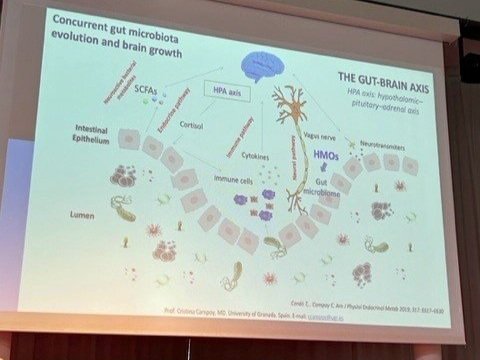
Time and interest are ushering in a new generation of open-minded PhD researchers, many of whom are women. They all want to talk about raw milk and its bioactive elements. Raw milk is truly a miracle of nature.  Being an event sponsor has allowed greater access to insider information about all things milk.  Below are my main takeaways from three intensive days of meetings, interactions, meals and dinner parties, and presentations in Cork Ireland at the University of Cork.

Raw Milk Institute was a Bronze Level Sponsor of the 2023 IMGC Symposium

Raw Milk Nourishes, Protects, and Directs

Raw milk is incredibly complex and perfectly designed to nourish, protect, and direct. We all know that raw milk is designed as the first food of life for babies to thrive and grow, yet as researchers continue to study raw milk, they discover many more benefits.

For instance, raw milk serves as a delivery system for immune-bioactive proteins. Peptides (which are chains of amino acid proteins) are protective of the baby by not allowing pathogens to cause illness. These functional proteins serve many roles, including protection of the baby.

Other specialized-proteins in breastmilk include natural mRNA, which provide the genetic information to direct cellular metabolic processes in the baby.  Breastmilk also contains stem cells for repair of damaged cells or tissues.

Raw milk also contains everything needed for its digestion. Raw milk has proteases, peptidases (for digesting proteins), lipases (for digesting fats), and bacteria that make lactase (for digesting lactose).

Additionally, when people drink milk, over time there are changes in the composition of the gut bacteria that make milk digestion easier. Lactase-producing bacteria found in the gut become the probiotic and as they feed on lactose, that becomes their selected prebiotic (food that bacteria chose to digest or eat). Over time the populations of these lactose-loving probiotic bacteria increase when they are fed lactose from dairy products.

The various milk proteins, immunoglobins, enzymes, fats and sugars are “qualitatively similar” between human breastmilk and cow milk. However, they are “quantitatively different” and appear at different levels and amounts in cow milk versus human milk. The same would be true for other bovine milks. The similarities are why humans can drink raw milk from cows, goats, and other animals. 

Milk’s Benefits Can’t Be Extracted

Many raw milk researchers are focused on finding ways to extract beneficial elements from raw milk. However, these elements are designed to work together with the full complement of many different macro- and micro- nutrients, enzymes, probiotics, etc in whole raw milk.

New products made with bio-actives extracted from raw milk will likely be met with suspicion, as well they should. The health benefits from whole, raw milk are the result of a complex interplay of bio-actives. Outside of the whole food matrix, those bio-actives are incomplete and not as effective as in their natural state.

Milk Fat is Essential to Its Beneficial Properties

Butterfat in milk is an essential part of milk’s overall beneficial properties. This fat is known to benefit brain development, immune system development, intestinal development, and the composition of the gut microbiota.

Butter fat globules are three-layer thick capsules that come in different sizes. The three-layered capsules are used by the gut as fiber; they also provide butyrate and butyric acids which are highly beneficial and healing to the lower gut. 60% of the bioactive elements found in raw milk are “carried on or inside” the fat globule. This says so much about skim milk, which has lost much of its beneficial value with the removal of the fat.

Researchers discovered that the fat globules in the milk are smaller in cows fed a high energy diet with high stress levels, such as cows being kept in concentrated animal feeding operations (CAFOs). The smaller fat globules in the milk do not contain bacteria inside that could ride through the stomach to the lower gut.

In contrast, the fat globules are larger in cows fed a low energy diet and under low stress levels (such as cows in pasture-based operations).  These larger fat globules carry bacteria inside of them. It is thought that the fat cell may act as a protective carrier vessel to carry bacteria though the stomach acid environment into the lower gut where they may be beneficial.

Pasteurization Damages and Denatures Milk

Pasteurization damages milk such that it becomes oxidated, highly allergenic, and hard to digest. It is a common protocol to pasteurize milk up to 3 or 4 times to achieve longer shelf life and assure that the milk is completely dead, with no regard for the essential and beneficial bio-actives that are destroyed in the process. 

Raw milk contains everything it needs to digest itself. Raw milk contains enzymes and bacteria that help create more enzymes to digest raw milk and all the sub elements. Milk maldigestion has been over simplified. It is not just lactose; it is the proteins and fats that also need help with digestion.

After pasteurization the bioactive elements needed for milk to digest itself are missing! Fats, proteins, and sugars all need digesting, but their enzymes and digestive bacteria are denatured or dead.  Without active enzymes, digestion of fat (via lipase) and proteins (via protease) is inhibited. This results in maldigestion in some consumers. 

Whereas raw milk helps to build immune system strength, pasteurized milk does not build up the immune system. Heat denatures the functional proteins and does not allow cellular direction. This can result in cellular confusion and chaos.

Raw whey proteins are highly anti-inflammatory and have many health benefits. The raw whey health benefit findings are consistent with other researchers in the Netherlands, including Dr. Ton Baars’ research on whey proteins showing that they stabilize MAST cells, control histamine release, and reduce allergies.

However, all whey is required to be pasteurized in the USA as per the Food and Drug Administration (FDA) and Pasteurized Milk Ordinance. Whey proteins are destroyed by processing and are highly sensitive to heat. One researcher has been frustrated in trying to extract the beneficial components from pasteurized whey. The heating of whey makes the components “sticky” such that they plug up the ultrafiltration micropores. Therefore, ultra filtration cannot be used to extract whey components from pasteurized whey.

New Pasteurization Technologies Cause Less Damage Than Traditional Heat Pasteurization

As an alternative to heat-based pasteurization, researchers are studying other methods such as high pressure (HPP), ultrafiltration, and ultraviolet (UV) light. These methods are effective at inactivating bacteria and less harmful to milk than heat-based pasteurization. For instance, both high pressure processing and ultraviolet processing preserve some of the bioactive milk proteins better than heat-based pasteurization.

Nonetheless, milk processors in the USA are resisting the use of these new technologies. In some other countries, UV and HPP are being successfully used, but in the USA the FDA continues to represent processors’ interests and thereby block the ability to innovate with these alternatives to heat processing. This failure to innovate with HPP, UV or Ultrafiltration is creating a loss of consumer interest in pasteurized milk as people continue to suffer from maldigestion when consuming pasteurized milk.

In Studies, 20,000+ Kids Drank Raw Milk With NO Milk-Related Illnesses

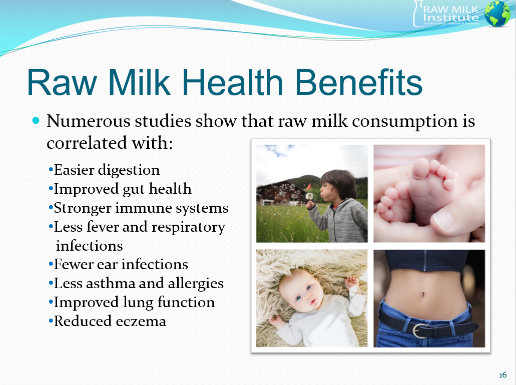
The pioneering PARSIFAL and GABRIELA studies of more than 55,000 kids in Europe really set the international high bar for studies on raw milk. The overall findings included reduced rates of asthma, eczema, respiratory illnesses, fevers, allergies, and ear infections in children who drank raw milk.

At the symposium, it was emphasized that during all of those studies and over twenty years of research, there was never a “red flag event.” A red flag event would be a reported illness from raw milk consumption. The studies included data from more than 20,000 children who drank raw milk, and there was not a single red flag event!

Yet, at the end of each of the peer reviewed and journal published articles, there is a disclaimer that says something such as, “even though there are health benefits to consuming raw milk, the researchers can not recommend raw milk because of the risks of raw milk consumption.” This disclaimer was included because peer review and journal publication political pressures demanded it, despite the fact that there was no basis in the research data.

Raw Milk Provides Sustainability for Farmers and Superb Nutrition for Consumers

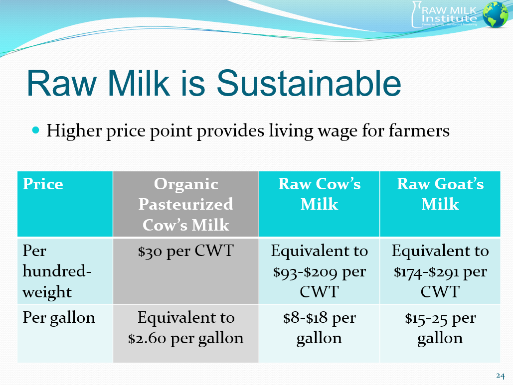
Farmers have been denied fair markets for their dairy products for more than a century. All of the value-added efforts are happening after products leave the farm. Milk processors continue to ensure that farmers are paid low prices for their milk, resulting in the loss of thousands of family farms. However, raw milk provides a pathway to sustainability and life satisfaction for dairy farmers.

Raw milk presents a unique farmstead product that brings all the added value back to the farmer with an incentive to work on quality. By selling directly to consumers, raw milk farmers are able to obtain greater financial rewards for their work, while consumers benefit from the improved flavor and nutrition. It’s a win-win for farmers and consumers!

Raw milk that is carefully and intentionally produced for direct human consumption is a low-risk food. This type of raw milk is wholly different from raw milk being produced in unhygienic conditions. Raw milk intended for direct human consumption is produced in sanitary conditions, with much care to ensure that the animals are healthy and that the milk is clean. This type of raw milk is tested often and held to rigorous standards to ensure that it is being produced in a way that discourages pathogen growth.

By combining nature’s blueprints, the bio-actives found in whole raw milk, standards for good production practices and modern testing systems, RAWMI Listed farmers are nourishing consumers safely. Congrats to all of the RAWMI Listed pioneers! 

Managing the Increased Risks of Calf-Sharing on Raw Milk Farms

Calf-sharing, i.e. allowing a cow’s offspring to nurse directly from its mother, is a common practice on small dairy farms.  Many farmers and consumers think that calf-sharing is ideal for the health and well-being of both the cow and calf, and it does present an idyllic picture of farm life. Calf-sharing can also reduce the workload for farmers, who don’t have to bottle-feed the calves.   

However, farmers who are producing raw milk need to be aware that calf sharing increases the risk of pathogens being present in the raw milk. The same is true for kid-sharing with goats.

Pathogens, Calves, and Kids

You may wonder: Why do calf-sharing and kid-sharing increase the risk of pathogens in raw milk?  Just like human babies, calves and kids explore the world with their mouths and can then directly transfer harmful bacteria to the udders as well as to the inside of the teat canals. Calves and kids have immature immune systems and are therefore more likely to harbor pathogens themselves.

Although pathogens in well-produced raw milk are rare, they are still an important consideration and we encourage all raw milk farmers to take pathogens seriously.  Pathogenic bacteria that can be carried by calves and kids include E coli 0157:H7, Salmonella spp., Campylobacter spp., and Listeria monocytogenes. Illnesses from these pathogens can be serious or even fatal. 

Many scientific studies have verified that calves and kids are more likely to carry pathogens than their fully-grown counterparts. Below are a couple of the studies; additional studies are listed in the references section at the end of this article.

  • A longitudinal study of Shiga-toxigenic Escherichia coli (STEC) prevalence in three Australian dairy herds -

    https://www.sciencedirect.com/science/article/pii/S037811359900173X?via%3Dihub -

    "In concurrence with previous studies, it appears that cattle, and in particular 1–14-week-old weanling calves, are the primary reservoir for STEC and EHEC on the dairy farm."

  • Age related differences in phylogenetic diversity, prevalence of Shiga toxins, Intimin, Hemolysin genes and select serogroups of Escherichia. coli from pastured meat goats detected in a longitudinal cohort study - https://www.ncbi.nlm.nih.gov/pmc/articles/PMC7391229/ - "Overall, virulence genes and STEC [virulent e coli] were detected in isolates from goat kids in higher proportions than adult animals. Additionally, isolates with 2 or more virulence genes were significantly higher in pre-weaned and goat kids around weaning than in adult goats."

Illness outbreaks from petting zoos provide further confirmation that calves and kids can transfer pathogens in real-world conditions.

  • Animal petting zoos as sources of Shiga toxin-producing Escherichia coli, Salmonella and extended-spectrum β-lactamase (ESBL)-producing Enterobacteriaceae -   https://pubmed.ncbi.nlm.nih.gov/33382208/ - “Animal petting zoos and farm fairs provide the opportunity for children and adults to interact with animals, but contact with animals carries a risk of exposure to zoonotic pathogens and antimicrobial-resistant bacteria... Of 163 faecal samples, 75 contained stx1, stx2 or stx1/stx2 genes, indicating the presence of STEC. Samples included faeces from sika deer (100%), sheep (92%), goats (88%), mouflons (80%), camels (62%), llamas (50%), yaks (50%), pigs (29%) and donkeys (6%)…”

This information makes some farmers and consumers uncomfortable, yet it is still important to consider in developing a plan for minimizing the risk of pathogens from raw milk.   

Staph aureus, Calves, and Kids

In addition to pathogens that can cause human illness, calf-sharing (and kid-sharing) can increase the chance that Staph aureus will be widespread in the dairy herd.  Staph aureus is a type of bacteria that colonizes inside the mammary tissue, thereby increasing the risk of recurrent mastitis. The presence of Staph aureus can also cause scar tissue in the udder, which may result in lower milk production over time.  Cows and dams can transfer Staph aureus to suckling calves and kids, such that Staph aureus can become widespread in the dairy herd.  

Bottle-Feeding Has the Lowest Risk for Pathogens

At the Raw Milk Institute, our goal is to help farmers better-understand the potential risks in raw milk production so that they can then take steps to minimize the risks.  We are not the raw milk police, and we do not forbid anyone from calf-sharing. However, we want to make sure that farmers are aware of the risks and can then plan for how to reduce the risks.  

To achieve the lowest risk-profile, calves and kids would be bottle-fed.  It is nonetheless very important to ensure that the calves and kids receive the colostrum in order to help build up their immune systems. Be aware that the manure from calves and kids can also be a source of pathogens.  

Studies and farmer experience have shown that early separation (within 24 hours of birth) reduces the stress of the separation on both calves and cows. Leaving the cow and calf together for longer periods increases the stress related to separation.

  • Effects of early separation on the dairy cow and calf: 2. Separation at 1 day and 2 weeks after birth - https://pubmed.ncbi.nlm.nih.gov/11179551/ - “Behavioural observations were conducted on 24 Holstein dairy cow-calf pairs during the first 24h after separation. Before separation, cow-calf pairs were generally inactive. After separation, cows from the late-separation treatment group showed higher rates of calling, movement and placing the head outside the pen, than cows in the early-separation group.”

Calves who have been separated from their mothers will do best if they are kept with at least one other calf rather than in isolation. 

  • The effect of individual versus pair housing of dairy heifer calves during the preweaning period on measures of health, performance, and behavior up to 16 weeks of age - https://pubmed.ncbi.nlm.nih.gov/33358809/ - Pair housing of dairy heifer calves during the preweaning period helps meet the natural social needs of the calf and has been shown to improve growth and starter intake during the preweaning period as compared with individual housing.

Raising calves can be time-intensive, so some farms choose to instead have their calves raised offsite at farms that specialize in calf-rearing.  

Managing the Risks of Calf-Sharing

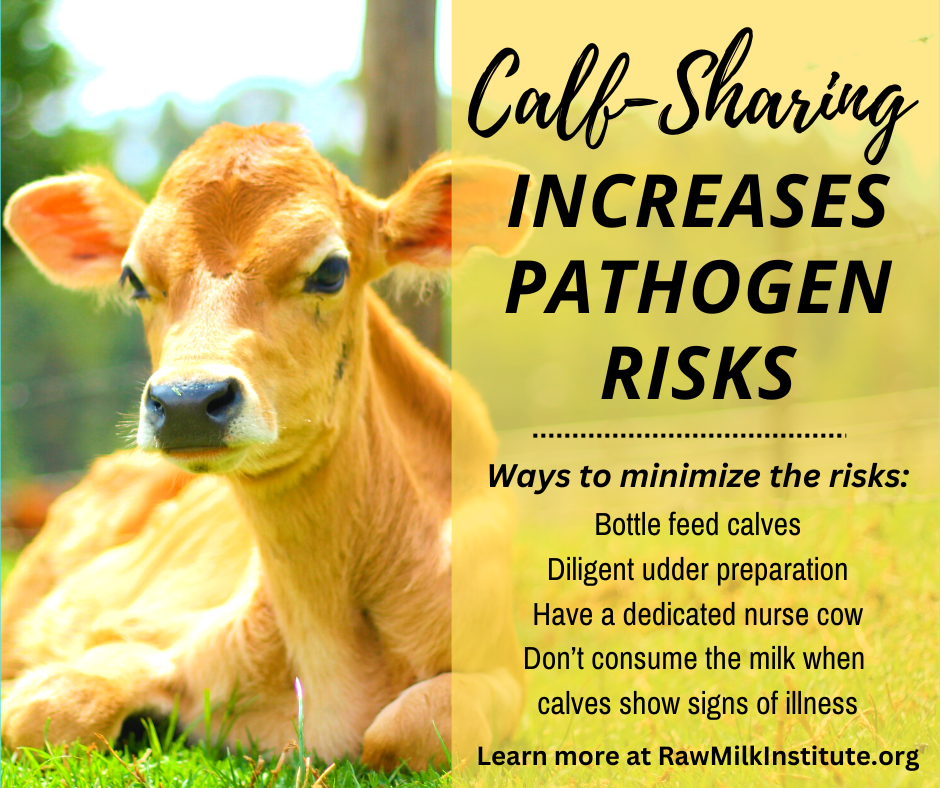
For farms that choose to calf-share or kid-share, below are some risk management strategies that have been employed successfully in small dairy farms that have participated in the Raw Milk Institute’s Listing program.  

  • Apply extra diligence to udder preparation and stripping.  Ensuring that the teats are well-cleaned, pre-dipped, and stripped prior to milking will reduce the chance of pathogens being present. (See our Udder Prep for Raw Milk article for more information.)

  • Closely monitor the calves/kids for any signs of illness.  If the calves/kids are ever showing signs of illness (such as diarrhea, runny nose, etc.), the milk would potentially have a greater risk of pathogens.  The milk should then be either diverted and not used for direct human consumption or the calves/kids should be separated from the herd until the illness has cleared.

  • Perform regular milk culture testing of your herd for Staph aureus to make sure it is not present. Staph aureus can show up intermittently so one test does not necessarily clear the herd.

  • Have a "nurse cow" or “nurse dam” to feed the calves or kids, whose milk is not used for human consumption.  This method needs to be utilized carefully, as too many calves/kids per nurse cow/dam can result in a loss of body condition and health problems for the nurse cow/dam.

  • As they grow to a few months old, some calves/kids can be especially hard on the teats when nursing.  This can result in damage or injury to the teats. If this occurs, it is best to separate the offspring from their mothers.

It is also worth noting that calf-sharing (or kid-sharing) will reduce the amount of milk that is available to sell to customers. This can become especially problematic as the calves/kids reach 5+ months of age.

Choosing not to calf-share or kid-share is a good option for farmers who want to have the lowest risk of pathogens in their raw milk.  However, calf-sharing and kid-sharing can be done successfully when farmers acknowledge and manage the risks. The techniques listed above will reduce the likelihood of anything going wrong, for the benefit of both the customers and farmers.

A less-detailed version of this article was published in the June-July 2023 issue of Graze Magazine.

References

  1. Age related differences in phylogenetic diversity, prevalence of Shiga toxins, Intimin, Hemolysin genes and select serogroups of Escherichia. coli from pastured meat goats detected in a longitudinal cohort study - https://www.ncbi.nlm.nih.gov/pmc/articles/PMC7391229/ - "Overall, virulence genes and STEC [virulent e coli] were detected in isolates from goat kids in higher proportions than adult animals. Additionally, isolates with 2 or more virulence genes were significantly higher in pre-weaned and goat kids around weaning than in adult goats."

  2. Role of calf-adapted Escherichia coli in maintenance of antimicrobial drug resistance in dairy calves - https://pubmed.ncbi.nlm.nih.gov/14766551/ - "The prevalence of antimicrobial drug-resistant bacteria is typically highest in younger animals, and prevalence is not necessarily related to recent use of antimicrobial drugs. In dairy cattle, we hypothesize that antimicrobial drug-resistant, neonate-adapted bacteria are responsible for the observed high frequencies of resistant Escherichia coli in calves."

  3. Antibiotic resistance and transferable antibiotic resistance of Escherichia coli isolated from Swedish calves 5 and 30 days old - https://pubmed.ncbi.nlm.nih.gov/1094406/ - "In comparison with the 30-day-old calves, the 5-day-old calves had significantly more strains with transferable antibiotic resistance (95.8 percent as against 63.4 percent)."

  4. Enterotoxigenic Escherichia coli Infections in Newborn Calves: A Review -

    https://www.ncbi.nlm.nih.gov/pmc/articles/PMC7130746/pdf/main.pdf - "Diarrhea caused by enterotoxigenic Escherichia coli is an infectious bacterial disease of calves that occurs during the first few days of life. The Escherichia coli that cause the disease possess special attributes of virulence that allow them to colonize the small intestine and produce an enterotoxin that causes hypersecretion of fluid into the intestinal lumen. These enterotoxigenic Escherichia coli are shed into the environment by infected animals in the herd and are ingested by newborn calves soon after birth."

  5. Prevalence of Escherichia coli O157:H7 in range beef calves at weaning -

    https://www.cambridge.org/core/journals/epidemiology-and-infection/article/prevalence-of-escherichia-coli-o157h7-in-range-beef-calves-at-weaning/EBD00C9EB16D36476F75D825C05139B0 - "This study was designed to determine the prevalence of Escherichia coli O157:H7 infection of beef calves at weaning, prior to arrival at the feedlot or mixing with cattle from other sources. Fifteen range cow-calf herds, which weaned calves in October and November, were sampled in Kansas, Missouri, Montana, Nebraska and South Dakota... Thirteen of the 15 herds (87%) were found to have at least one positive isolation of E. coli O157:H7 in faecal samples...This study indicates that E. coli O157:H7 infection before weaning, prior to entry into feedlots, is widespread. Furthermore, serologic evidence suggests that most calves (83%) and all herds (100%) have been exposed to E. coli O157.

  6. Diversity, Frequency, and Persistence of Escherichia coli O157 Strains from Range Cattle Environments -

    https://www.ncbi.nlm.nih.gov/pmc/articles/PMC152399/ - "The number of XbaI-PFGE subtypes, the variable frequency and persistence of subtypes, and the presence of identical subtypes in cattle feces, free-flowing water sources, and wildlife feces indicate that the complex molecular epidemiology of E. coli O157 previously described for confined cattle operations is also evident in extensively managed range cattle environments."

  7. A longitudinal study of Shiga-toxigenic Escherichia coli (STEC) prevalence in three Australian dairy herds -

    https://www.sciencedirect.com/science/article/pii/S037811359900173X?via%3Dihub -

    "In concurrence with previous studies, it appears that cattle, and in particular 1–14-week-old weanling calves, are the primary reservoir for STEC and EHEC on the dairy farm."

  8. Comparison of Diversities of Escherichia coli O157 Shed from a Cohort of Spring-Born Beef Calves at Pasture and in Housing - https://www.ncbi.nlm.nih.gov/pmc/articles/PMC1065151/ - "Overall, there was no demonstrable difference in shedding between calves when housed and at pasture. However, when shedding occurred, the rate of shedding was greater among calves in pen S (0.025 < P < 0.05) and pen N (0.05 < P ≤ 0.10) than when at pasture"

  9. Persistence of verocytotoxin-producing Escherichia coli O157:H7 in calves kept on pasture and in calves kept indoors during the summer months in a Swedish dairy herd -

    https://pubmed.ncbi.nlm.nih.gov/11407548/ - "The objective of this part of the study presented here was to examine the persistence of VTEC O157:H7 in calves that were kept on pasture and indoors, respectively, during the summer...The faecal samples from the calves kept on pasture were negative during the whole period...This suggests that calves on pasture may be less exposed to the bacteria or that they clear themselves. In the pen group, there were between one and six culture positive individuals per sampling occasion. One of the calves that was housed indoors was positive in faecal culture on four consecutive samplings." (One big limitation on this study is the very small sample size. There were only 6 calves in each group, which is a very small number so that makes this data somewhat less able to be used to draw widely-applicable conclusions.)

  10. Animal petting zoos as sources of Shiga toxin-producing Escherichia coli, Salmonella and extended-spectrum β-lactamase (ESBL)-producing Enterobacteriaceae -   https://pubmed.ncbi.nlm.nih.gov/33382208/ - “Animal petting zoos and farm fairs provide the opportunity for children and adults to interact with animals, but contact with animals carries a risk of exposure to zoonotic pathogens and antimicrobial-resistant bacteria. The aim of this study was to assess the occurrence of Shiga toxin-producing Escherichia coli (STEC), Salmonella, extended-spectrum β-lactamase (ESBL)-producing Enterobacteriaceae and methicillin-resistant Staphylococcus aureus (MRSA) in animal faeces from six animal petting zoos and one farm fair in Switzerland. Furthermore, hygiene facilities on the venues were evaluated. Of 163 faecal samples, 75 contained stx1, stx2 or stx1/stx2 genes, indicating the presence of STEC. Samples included faeces from sika deer (100%), sheep (92%), goats (88%), mouflons (80%), camels (62%), llamas (50%), yaks (50%), pigs (29%) and donkeys (6%), whereas no stx genes were isolated from faeces of calves, guinea pigs, hens, ostriches, ponies, zebras or zebus. Salmonella enterica subsp. enterica serovar Stourbridge (S. Stourbridge) was detected in faecal samples from camels. A total of four ESBL-producing E. coli strains were isolated from faeces of goats, camels and pigs... This study provides data that underscore the importance of hygiene measures to minimize the risk of transmission of zoonotic pathogens and MDR, ESBL-producing E. coli to visitors of animal petting venues.” 

  11. Investigations on Transfer of Pathogens between Foster Cows and Calves during the Suckling Period - https://www.ncbi.nlm.nih.gov/pmc/articles/PMC8469241/ - “The present study aimed to compare the pathogens detected in the mammary glands of the foster cow with those in the oral cavities of the associated foster calves and to evaluate the resulting consequences for udder health, calf health and internal biosecurity... Transmission of P. multocida and S. aureus probably occurred during suckling. For S. sciuri and Sc. suis, environmental origins were assumed. Transmission from dam to foster cow with the suckling calf as vector could not be clearly demonstrated.”

  12. Effects of early separation on the dairy cow and calf: 2. Separation at 1 day and 2 weeks after birth - https://pubmed.ncbi.nlm.nih.gov/11179551/ - “Behavioural observations were conducted on 24 Holstein dairy cow-calf pairs during the first 24h after separation. Before separation, cow-calf pairs were generally inactive. After separation, cows from the late-separation treatment group showed higher rates of calling, movement and placing the head outside the pen, than cows in the early-separation group.”

  13. The effect of individual versus pair housing of dairy heifer calves during the preweaning period on measures of health, performance, and behavior up to 16 weeks of age - https://pubmed.ncbi.nlm.nih.gov/33358809/ - Pair housing of dairy heifer calves during the preweaning period helps meet the natural social needs of the calf and has been shown to improve growth and starter intake during the preweaning period as compared with individual housing. 

Sept 23rd TEXAS Training: Producing World-Class Raw Milk

On Saturday September 23rd in Mount Pleasant, TX, the Raw Milk Institute (RAWMI) will be presenting a full day workshop on Producing World Class Raw Milk.

Whereas farmers producing milk for the pasteurized market often struggle to make ends meet, raw milk farms are thriving. Raw milk presents a unique opportunity for farmers to move into an expanding market by implementing intentional practices and higher standards to produce low-risk, delicious raw milk.

Raw milk is an exceptional farmstead product that brings all the added value back to the farmer with an incentive to work on quality. By selling directly to consumers, raw milk farmers are able to obtain greater financial rewards for their work, while consumers benefit from the improved flavor and nutrition. It’s a win-win for both farmers and consumers!

About the Training

This training workshop will be presented by the Raw Milk Institute (RAWMI) in conjunction with Northeast Texas Community College (NTCC). This class will be from 8am-4pm Central Time, and it will count for Continuing Education (CE) credit, too!

This RAWMI presentation will focus on:

  • History of raw milk

  • Why raw milk farms are thriving

  • Health benefits of raw milk

  • Benefits of selling raw milk

  • Safety and risks of raw milk

  • Grass-to-glass raw milk risk management

  • Raw milk testing

  • Building a successful raw milk market

We'll spend the morning and early afternoon at the NTCC Agriculture Center at 2886 FM 1735, Mount Pleasant, TX. Then we’ll head over to a raw milk dairy on campus for a hands-on experience.

How to Register

The registration fee is just $25, which will include the full day of training plus a boxed lunch!

You can register here: https://dynamicforms.ngwebsolutions.com/Submit/Start/6250b435-49b6-49a6-b6d9-f200b00c9eb3?SSO=N

Register to Attend

THRIVING with Raw Milk Webinar: FREE Video Seminar with Focus on Iowa

Whereas farmers producing milk for the pasteurized market often struggle to make ends meet, raw milk farms are thriving. Iowa’s new law presents a unique opportunity for farmers to move into an expanding market by implementing intentional practices and higher standards to produce low-risk raw milk.

Raw milk presents a unique farmstead product that brings all the added value back to the farmer with an incentive to work on quality. By selling directly to consumers, raw milk farmers are able to obtain greater financial rewards for their work, while consumers benefit from the improved flavor and nutrition. It’s a win for both farmers and consumers!

Watch Our FREE 1.5 Hour Seminar

Below is our 1.5 hour video seminar, Thriving with Raw Milk, presented by:

  • Mark McAfee - Raw Milk Institute President and Founder

  • Sarah Smith - Raw Milk Institute Vice President

  • Joseph Heckman, PhD - Raw Milk Institute Board Member and Soil Scientist from Rutgers

  • Esther Arkfeld - Iowa Dairy Farmer and Advocate for Raw Milk Legalization

  • Fred Hall - Iowa State University Extension and Outreach Dairy Field Specialist

  • Senator Jason Schultz - Legislative Sponsor of Bill to Legalize Raw Milk in Iowa

This Raw Milk Institute seminar focuses on:

  • Iowa’s new raw milk law

  • How raw milk farms are thriving

  • Health benefits of raw milk

  • Benefits of selling raw milk

  • Safety and risks of raw milk

  • Introduction to raw milk risk management

  • Building a successful raw milk market

August 12th FREE Iowa Raw Milk Webinar

Raw milk is now legal in Iowa! Whereas farmers producing milk for the pasteurized market often struggle to make ends meet, raw milk farms are thriving. Iowa’s new law presents a unique opportunity for farmers to move into an expanding market by implementing intentional practices and higher standards to produce low-risk raw milk.

On Saturday August 12th at 11am Central, the Raw Milk Institute (RAWMI) will be presenting a free 1.5-hour Iowa Raw Milk seminar. This presentation will be livestreamed online, so farmers from across Iowa will be able to conveniently attend from their own location.

Raw milk presents a unique farmstead product that brings all the added value back to the farmer with an incentive to work on quality. By selling directly to consumers, raw milk farmers are able to obtain greater financial rewards for their work, while consumers benefit from the improved flavor and nutrition. It’s a win for both farmers and consumers!

About the Training

This 1.5 hour webinar will be presented by the Raw Milk Institute (RAWMI) in collaboration with Esther Arkfeld (RAWMI Listed farmer who was instrumental in the legalization of raw milk in Iowa).

This RAWMI presentation will focus on:

  • Iowa’s new raw milk law

  • Why raw milk farms are thriving

  • Health benefits of raw milk

  • Benefits of selling raw milk

  • Safety and risks of raw milk

  • Introduction to raw milk risk management

  • Building a successful raw milk market

We'll be providing lots of practical tips for farmers who are interested in switching to raw milk as a sustainable business model.

How to Register

This webinar is open and free for farmers in Iowa as well as elsewhere.

SORRY, we had to close registration for this event at 100 attendees. Let us know if you missed this but want to attend a future event.

Iowa: The Path to Legalization of Raw Milk

After a 17-year battle, raw milk is now legal in Iowa.  The recent legalization efforts to get this passed into law through the Iowa legislature were led by Esther Arkfeld and her group, Iowa for Fresh Milk.

Esther is a homeschooling mother and small-scale dairy farmer who was mentored by the Raw Milk Institute. Esther’s De Melkerij micro-dairy achieved Listing status in the Fall of 2022. This allowed Esther to use her own farm as an example of how low-risk raw milk can be achieved.   

For the many others who are still fighting for legal raw milk elsewhere, we wanted to share with you Esther’s tips on how she was able to shepherd this legislation through successfully.  The following is an interview with Esther.  

What was the status of raw milk in Iowa previously?

Before this law was passed it was illegal to sell raw milk in our state.  We were 1 of 7 states in our country who still made this illegal.


What does the new law change with regards to raw milk in Iowa?

With the new law, as of July 1st farm-to-direct-consumer transactions are now legal.  Raw milk farmers can have up to 10 milking animals and they must perform bacterial tests monthly. Consumers can either pick up from the farmer or the farmer may deliver.  


How will this law change things for your family's farm?

We have operated as a herdshare for the last year. Even though Iowa did not have a law for or against herd shares, it was at times a bit worrisome. The new law will be a huge relief in a sense. We will be able to advertise and speak of our business more freely.  Our family looks forward to the opportunity to normalize the raw milk conversation and share our products with our local community.

What were the most successful strategies you used towards getting raw milk legalized?

I believe there were several important things that made us successful.

Persistence was key. Because we had been fighting this for 17 long years and came back each year, the legislature realized we were NOT going away. As a matter of fact, our voices were only growing louder as we gained more supporters each year.

Very clear "Call To Action" campaigns for our supporters were another important part of the strategy. When we sent out "Call To Action" alerts by email or on social media, we explained briefly what needed to be done and why.

We made the actions easier to accomplish by giving template verbiage for people to use (and personalize if they wished) and also gave them email addresses of legislators that needed to be contacted. This in turn made it easier for our supporters to accomplish because they could cut and paste and customize as they needed. 


How did you gather legislator support?

Education on raw milk standards was part of our success.  Legislators were simply not aware of the current data in regards to raw milk.  They weren't aware of ways one could produce low-risk raw milk and weren't aware of the health benefits.  Because I was a RAWMI certified farmer, not only was I able to show them research data, statistics, and Pubmed articles but also my own data and test results from my farm.  By educating them on the current research and data we were able to build legislator support.

Our grassroots efforts allowed us to reach legislators across the state. When we did "Call To Action" campaigns, volunteers would reach out to their local legislators to ask for their support. As more emails and calls came to their desks, the legislators began to realize that this affected their local constituents. People across the state also attended legislative meetings in their local areas which allowed them to meet with their legislator in person. 

The grassroot efforts were critical in this area. Their calls, emails, in-person meetings were vital. Then, as some of us went to the capitol to meet with legislators in person they would already be aware of the topic and know someone in their local community that this would impact. This really legitimized the issue. We also built a relationship with a lobbyist from Americans For Prosperity, Tyler, who supported us. 

How did you gather grassroots support?

We gathered grassroot support through a variety of ways. First, we continued to encourage our community that had been fighting this from the early days. We talked to our neighbors and used social media as well as email campaigns. Most people, even if they did not consume raw milk themselves, couldn't understand why this was such an issue. Many saw this as government overreach and supported our cause.


Were any groups working in opposition to you? 

Every lobbyist at the capitol who had remotely anything to do with our food system was registered as opposed except 1. This was an uphill battle but in the end the peoples' voices drowned them out. We were heard, and we won.


More Tips for Success from Esther

A quote that really stuck with me during this fight is, "Freedom requires participation" by Joel Salatin. 

Get involved with your local legislators, even if you don't like politics. Go to events that they may be hosting and make it a point to introduce yourself. Then ask them where they stand on the issue. If they aren't sure or seem to be opposed, ask them why. 

Kindly ask them what information you could provide that may answer their questions. Build this relationship.  In turn it legitimizes your issue.

Speak to other supporters within your area and across your state and encourage them to do the same.  Your voice matters and this issue matters. 

And remember in all of this, honey goes down better than vinegar. 

Another tip is to reach out to the folks at Raw Milk Institute, Weston A Price/Real Milk, and Americans For Prosperity.  I cannot say enough about their support during this fight.  Having them in our corner made a huge impact.  They helped with resources, data, reviewed the language of the bill, and testified in favor of our cause. 


Welcoming Farms in Minnesota and Vermont to RAWMI Community

The Raw Milk Institute (RAWMI) sends a warm welcome to two more farmers who have completed our Listing program! RAWMI offers free mentoring to all dairy farmers. Whether they are milking one cow, a handful of goats, or a large herd, the principles of safe raw milk production form a foundational toolset that benefits all dairy farmers and their customers. 

Some of the farmers we mentor choose to keep it casual, and are satisfied to just ask us a few questions before continuing their raw milk journeys. There is another set of farmers, though, that is not content to just dip their toes in the water; they want to dive right in and take their entire milk process to the next level. 

For these farmers, we offer our (free) RAWMI Listing program, wherein we assist farmers in developing their own unique on-farm Risk Analysis and Management Plan, documenting their processes with written Standard Sanitary Operating Procedures, and identifying the Critical Control Points that are essential to their production of safe raw milk. RAWMI Listed farmers test their milk at least monthly for ongoing assurance that their processes are working well to produce low-risk raw milk. RAWMI Listing is the gold standard for raw milk producers.

Two farms have recently completed the RAWMI Listing process, and we extend them a warm welcome into our growing community!

Fiat Farm – Bethel, Minnesota

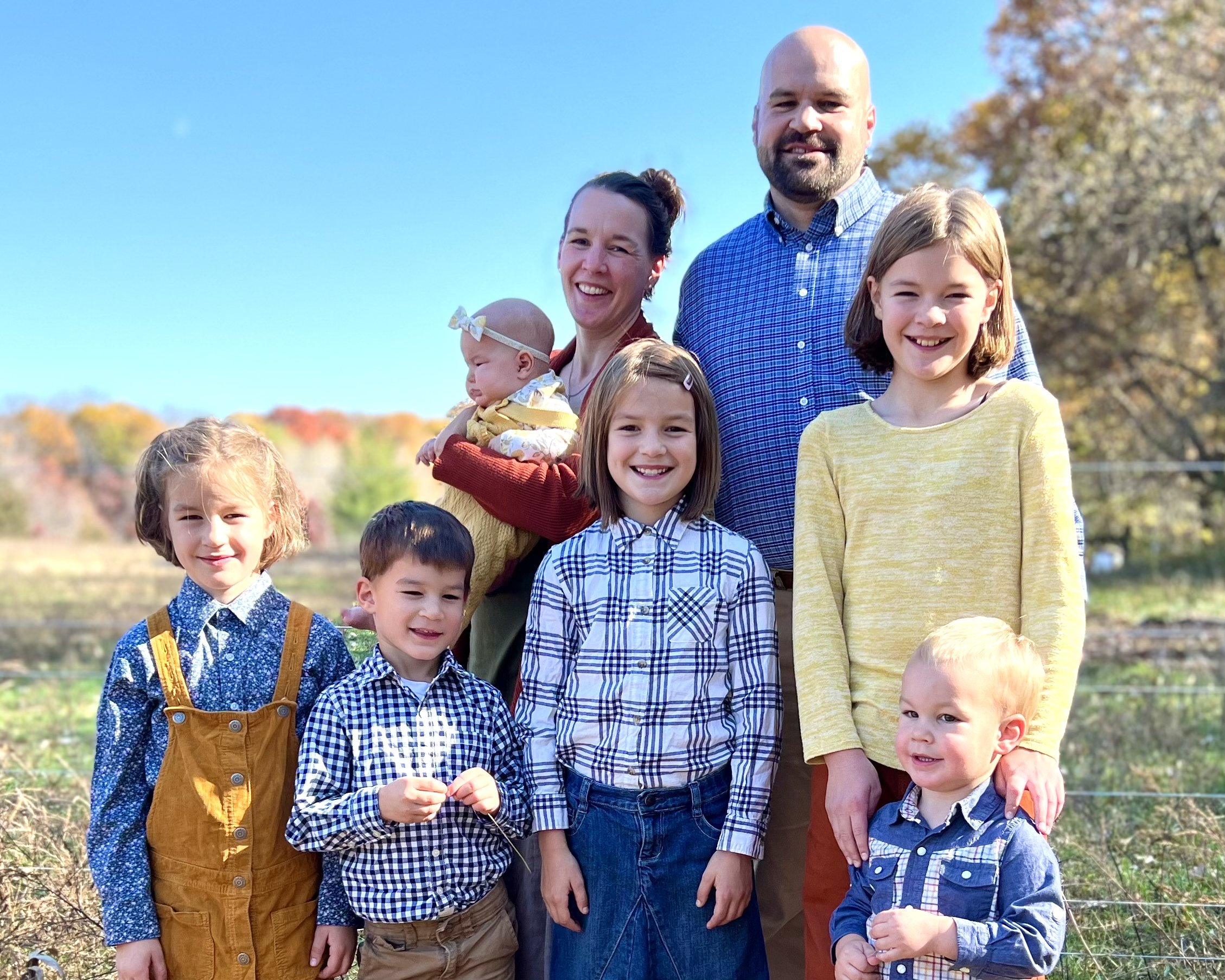
Fiat Farm is operated by Francesca and Matt Steffel. Fiat Farm is the first dairy from Minnesota to achieve RAWMI Listing. Fiat Farm was started with a desire to give the Steffel’s six children rural childhoods in an agricultural environment that would teach them hard work and responsibility.  They have been raising their children on raw milk for 10+ years.

Francesca and Matt have worked to establish the natural pasture soils on their property and are diligent about providing their herd with the best possible feed and environment to thrive. They utilize an on-farm lab for frequent bacteria testing of their milk. The Steffel’s passion for regenerative farming and milking cows grew into a desire to share the high-quality milk they produce with their local community.

You can learn more about Fiat Farm here:

Hillside Springs Homestead – Poultney, Vermont

Hillside Springs Homestead is operated by David Atherton and Erica Wellington in Vermont.  David is a science professor and Hillside Springs Homestead is the first dairy from Vermont to achieve RAWMI Listing. Hillside Spring’s primary focus is producing the tastiest and healthiest raw milk available.

David and Erica's herd has a high quality of life, including rotational grazing during the warm months and accessible shelter from the cold during Vermont’s winters. Hillside Springs utilizes an on-farm lab for frequent bacteria testing of their milk. Raw milk is their passion and they love to share it with the community.

You can learn more about Hillside Springs Homestead here:

Join Us for Raw Milk Training in Oregon June 17-18

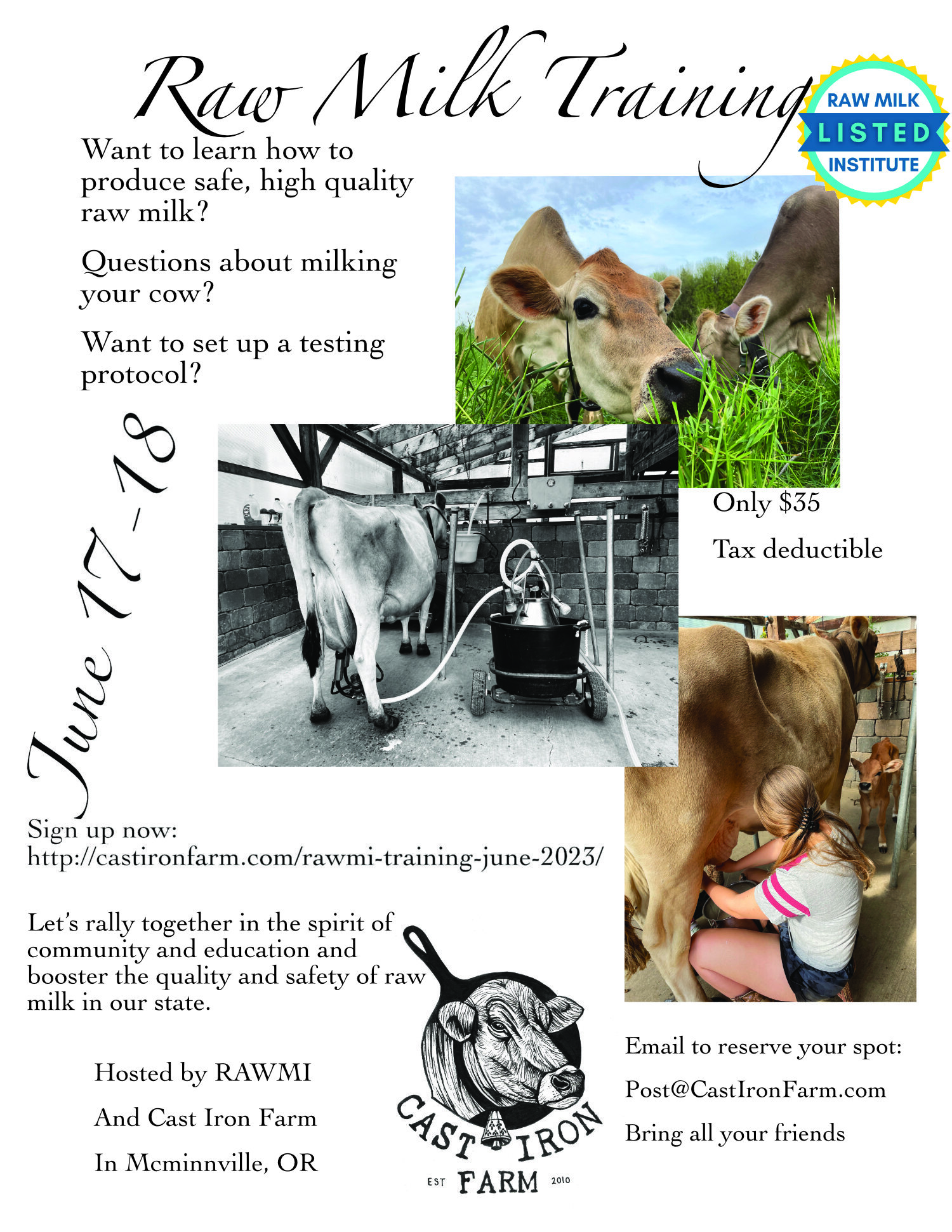
On June 17-18 2022, the Raw Milk Institute (RAWMI) will be providing Raw Milk Risk Management training in Oregon. This training is will be done in collaboration with Cast Iron Farm (RAWMI Listed farm in Oregon).


About the Training

This 2-day intensive RAWMI training workshop will focus on the benefits of raw milk, grass-to-glass identification of risks, development of a risk management plan, and lessons learned from other raw milk dairies. It is our goal to assure that raw milk is safe and continues to be freely available for both farmers and consumers in Oregon.

The training will be hosted at Cast Iron Farm in McMinnville, Oregon. We'll be providing lots of practical tips for the production of safe raw milk. The training will include formal presentations as well as demonstrations and tours at Cast Iron Farm. This training has been shown to reduce outbreaks and illnesses, increase safety, and lower insurance costs.


Cost and Registration

The cost for this 2-day training workshop is only $35.

If the cost is a barrier, feel free to contact Christine at Cast Iron Farm to learn about potential scholarships.

You can register for the class here:

http://castironfarm.com/rawmi-training-june-2023/

Register for Class

Class Schedule

Saturday June 17th

  • 9:30am - Arrival and introductions

  • 10:00am - 45 minute presentation by Oregon Department of Ag outlining the new CAFO regulations for anyone owning dairy animals.  This will include time for Q&A. If you do not feel comfortable attending a presentation given by the state agency, feel free to join us after lunch.

  • noon-1pm - Light lunch and snacks

  • 1pm-3pm - RAWMI presentation by Mark McAfee on health benefits of raw milk, safety and risks of raw milk

  • 3pm-3:20pm - Stretch break

  • 3:30pm-5pm - RAWMI presentation on raw milk risk management from grass-to-glass

Sunday June 18th

  • 9:30am - Milking demonstration and tour of Cast Iron Farm

  • 10:30am-noon - RAWMI presentation about raw milk testing and and building a successful raw milk business

  • noon-1pm - Light lunch and snacks

  • 1pm - One-on-one questions and consultations with RAWMI to answer all your questions

Sunday afternoon tours of Godspeed Hollow, another RAWMI listed farm 20 minutes from Mcmminnville, can be arranged by appointment for those interested.

RAWMI Annual Report for 2022-23

The Raw Milk Institute (RAWMI) is on a mission to improve the safety and quality of raw milk and raw milk products through farmer training, rigorous raw milk standards, raw milk research, and improving consumer education.

In 2022, RAWMI was awarded a 4th grant for $50k from the Regenerative Agriculture Foundation (RAF) to further our work. RAWMI matches an economic benefit of stewardship of pastures and soils to high value raw dairy products for consumers. Safe raw milk from pastured cows can sustain the farm financially while the grazing improves the soils.

With the 4th grant from RAF, RAWMI was able to accomplish much towards the overall goal of universal access to safe raw milk. Over the last year, RAWMI:

  • Trained over 150 farmers, legislators, university professors, and consumers on raw milk benefits and risk management

  • Prepared and presented an intensive 4-hour training course on Raw Milk Risk Management for farmers and regulators in two Montana locations

  • Met in-person with state and local regulators in Montana in support of newly-legalized raw milk

  • Coordinated with Northeast Texas Community College in preparation for a Raw Milk Risk Management Training Workshop in Texas for Fall 2023

  • LISTED five new farms in Iowa, Michigan, Montana, and North Carolina, who each went through the process of developing an individualized Risk Assessment and Management Plan (RAMP) for managing the health and hygiene of their unique farms

  • Served as the raw milk hotline for farmers in need across the USA and Canada

  • Provided one-on-one mentoring in the production of low-risk raw milk to over 40 additional farms in Wisconsin, Ohio, North Carolina, Oregon, Minnesota, New York, Kansas, Virginia, Illinois, Iowa, Tennessee, Alaska, North Dakota, Indiana, Utah, Missouri, California, Michigan, Montana, Texas, Idaho, Vermont, Washington, Oregon, Ontario Canada, British Columbia Canada, Dorset England, Beirut Lebanon, and Telengana India

  • Hosted quarterly meetings for LISTED farmers, which allow the farmers to stay up-to-date on the latest lessons learned for safe raw milk

  • Amassed hundreds of raw milk test data from RAWMI LISTED farms 

  • Attended the International Milk Genomics Consortium Conference

  • Worked with researchers from Spectacular Labs who are developing on-farm technology for pathogen testing

  • Worked towards increased legal access to raw milk in Iowa, Wisconsin, and Canada (with Canadian Artisan Dairy Alliance)

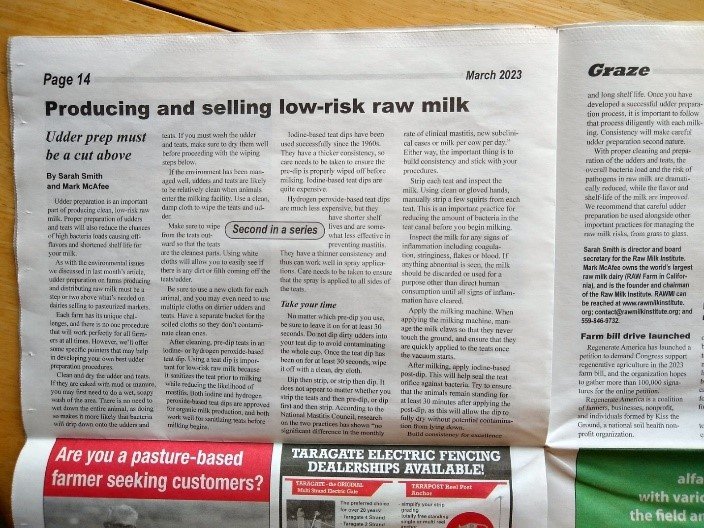
  • Wrote 4 articles on Raw Milk Risk Management strategies which were published in Graze magazine

  • Published 7 content pieces on the RAWMI website

  • Began work on two books about raw milk, one focused on risk management and the other as a children’s book about raw milk

  • Developed additional on-farm lab training materials and provided on-farm lab sponsorships to 12 farms


Raw Milk Training

RAWMI taught about raw milk health benefits and safety in the United States and Canada with in-person and web-based training. Whenever RAWMI teaches about raw milk risk management, soil and conditions management are emphasized as key elements in creating healthy, sustainable farms.

RAWMI trained over 150 farmers, legislators, university professors, university students, and consumers in association with the following:

  • Montana’s Alternative Energy Resources Organization (AERO) 

  • Canadian Artisan Dairy Alliance (CADA)

  • Rutgers University

  • Wild Willow Farm and Education Center of San Diego

Raw Milk Support in Montana

RAWMI continued to provide support and resources for the recent legalization of raw milk in Montana.  When the Local Food Choice Act (SB199) legalized raw milk in Montana, it also prevented the Department of Public Health and Human Services (DPHHS) from imposing any standards for the production of raw milk. Following an outbreak of Campylobacter that was tied to a raw dairy farm, RAWMI became heavily involved to make sure that raw milk farmers learn important risk management strategies to allow both farmers and consumers to thrive in Montana.

With a small-stipend to cover travel expenses from AERO Montana, in September 2022 RAWMI taught Raw Milk Risk Management Training courses in Big Timber and Avon Montana.  These courses were attended by dozens of farmers and several state regulators. RAWMI also met with state regulators at DPHHS to discuss ways to help Montana farmers have access to the information they need in order to produce low-risk raw milk. 

Raw Milk Support in Texas

RAWMI is collaborating with Northeast Texas Community College in preparation for teaching a Raw Milk Risk Management course near Dallas TX. This training course is scheduled for September 2023 and will be aimed at helping Texas raw milk farmers learn risk management strategies for producing low-risk raw milk.  The training class will include a 4-hour classroom session followed by a visit to a local raw milk farm.


Farmer Mentoring  

RAWMI provided one-on-one mentoring and troubleshooting support for low-risk raw milk production for over 40 farmers across the United States, Canada, and internationally. This included helping farmers optimize their raw milk production, overcome problems in their milk systems and testing, and learn more about successful business practices.  This mentorship benefited farmers in the following locations:

RAWMI LISTED Farms

RAWMI LISTED farmers are dedicated to producing clean, safe raw milk. The RAWMI listing process involves the development of individualized Risk Assessment and Management Plans (RAMPs) for managing the health and hygiene of each unique farm. RAWMI LISTED farms submit test data monthly to show that they are in compliance with RAWMI Common Standards, which target a rolling three-month average of <5,000 standard plate count (SPC) and <10 coliforms per ml of raw milk.

In the last year, RAWMI LISTED the following five farms:

  • De Melkerij in Harlan, Iowa

  • Milk House Farm in Corunna, Michigan

  • Seven Seasons Farm in Oxford, North Carolina

  • Dancing Feathers Farm in Bloomingdale, Michigan

  • Wildflower Raw Milk in Avon, Montana

To-date, RAWMI has LISTED 34 farms, and there are currently 27 active LISTED farms in the United States and Canada.

RAWMI provided continuing support to all LISTED farmers to enable sustained excellence in low-risk raw milk. This included quarterly meetings for LISTED farmers, which allow the farmers to stay up-to-date on the latest lessons learned for safe raw milk, exchange ideas for improvements, and collaborate with the RAWMI Board of directors.

Raw Milk Immediate Help Hotline

RAWMI provided immediate support for numerous farmers in need. This included helping farmers troubleshoot elevated bacteria counts, equipment problems, unexpected test results, etc.  This service was provided to farmers across the USA and Canada, including in Oregon, Iowa, Virginia, Wisconsin, Amish communities, and more. 


Raw Milk Research and Science

RAWMI’s mission includes supporting raw milk research and science. Through this work, RAWMI helps raw milk become safer and more accepted by regulatory agencies.

Raw Milk Bacterial Test Data

RAWMI LISTED farmers test their milk at least monthly for coliforms and Standard Plate Count (SPC). These tests provide a way to measure the amount of bacteria present in the milk, as well as providing a measure of the overall hygiene and cleanliness of the milk. Monthly testing serves as a useful confirmation step for ensuring that raw milk is being produced in a way that discourages pathogen growth and is therefore low-risk.

Test data from LISTED farms is submitted to RAWMI monthly. RAWMI amassed over 1,100 test data from RAWMI LISTED farms over the last year.  Below are averages of all RAWMI data amassed thus far.

This data can be used for raw milk research and demonstrates that low-risk raw milk is achievable on both small-scale and large-scale raw dairy farms.


International Milk Genomics Consortium

RAWMI attended the 19th International Milk Genomics Consortium (IMGC) conference at UC Davis. The IMGC provides access to the most leading-edge studies on milk genomics from PhD researchers across the world.


Development of On-Farm Pathogen Testing Technology

On-farm pathogen testing for raw milk has been considered too risky due to the potential for cross-contamination and inadvertent pathogen release.  However, researchers from Spectacular Labs are developing new technology for rapid on-farm pathogen testing. RAWMI continued collaborating with Spectacular Labs towards the development of pathogen tests that could be used on-site by farmers as part of an overall risk reduction strategy.


Raw Dairy Legalization and Support

RAWMI worked towards increased legal access to raw milk in Iowa, Wisconsin, and Canada.  This included providing references, support, training, and advocacy for proposed legislation in conjunction with lawmakers and farmers. RAWMI also collaborated with the Canadian Artisan Dairy Alliance, who is working towards legalization of raw milk in Canada.

Raw Dairy Educational Outreach

RAWMI created educational materials and articles for raw milk consumers and the general public. The following four articles were published in Graze magazine. This will help RAWMI’s training reach farmers who do not utilize the internet, such as Amish farmers.

  • Managing the Conditions for Low-Risk Raw Milk

  • Udder Preparation for Low-Risk Raw Milk

  • Rapid Chilling of Raw Milk Lowers Pathogen Risk and Improves Shelf-Life

  • Milk from “Fresh Cows” Presents a High Risk of Pathogens

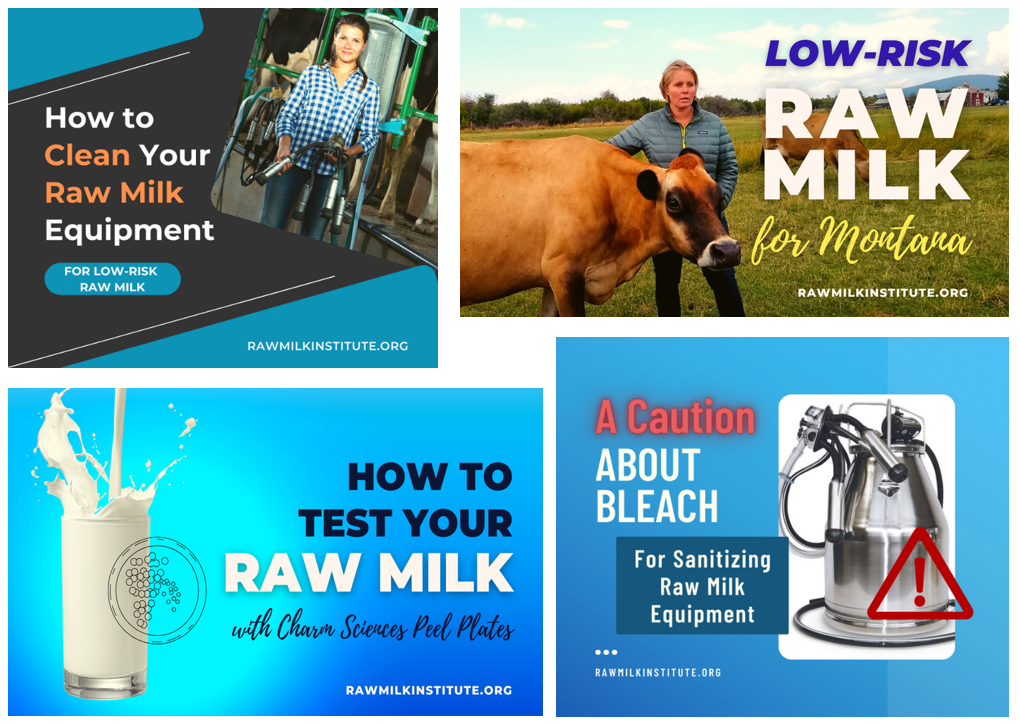
RAWMI published the following articles and videos to the RAWMI website and social media:

  • Video: On-Farm Raw Milk Testing with Charm Sciences Peel Plates

  • Low-Risk Raw Milk for Montana

  • A Caution About Bleach and Chlorinated Sanitizers for Milking Equipment and Bottles

  • How to Clean Your Milking Equipment for Low-Risk Raw Milk

RAWMI also began work on two books about raw milk, one focused on risk management and the other as a children’s book about Henry Coit’s contributions to safe raw milk.  

On-Farm Lab Training and Sponsorships

Frequent bacterial testing of raw milk is one of the pillars of producing low-risk raw milk. However, milk testing costs can be an ongoing financial burden which make small-scale farmers hesitant to test their milk often. On-farm testing is a great solution to this dilemma.

On-farm lab testing is a powerful tool for raw milk farmers.  It allows for frequent testing, so farmers can better identify issues before they turn into big problems, and it also helps immeasurably with troubleshooting when needed.  On-farm labs require an initial investment of $800-$1,000, but once the lab is in-place the cost per test is only $1-$3.

With RAWMI’s sponsorship, the following twelve additional farms were able to build their own on-farm labs for testing coliforms and Standard Plate Count.

  • Alaska – Rady Family Farmstead

  • Iowa – De Melkerij

  • Michigan – Dancing Feathers

  • Minnesota – Fiat Farm

  • Montana – Wildflower Raw Milk

  • North Carolina – Seven Seasons Farm

  • Tennessee – Whispering Willows

  • Texas – CT Ranch

  • Texas – Hebrews Farm

  • Texas – Hoof and Feather

  • Utah – Briar Patch Creamery

  • Vermont – Between the Trees

  • British Columbia Canada Farm

Rapid Chilling of Raw Milk Lowers Pathogen Risks and Improves Shelf-Life

For raw milk production, risk management and customer satisfaction go hand-in-hand.  Many of the strategies that result in low-risk raw milk also work well to keep customers happy with delicious, long-lasting milk. Rapid chilling is one such strategy that lowers the risk of pathogens while also improving the flavor and shelf-life of raw milk.

Although pathogens in well-produced raw milk are rare, they are still an important consideration and we encourage all raw milk farmers to take pathogens seriously.  The four main pathogens of concern that can be found in raw milk are E coli 0157:H7, Salmonella spp., Campylobacter spp., and Listeria monocytogenes. Illnesses from these pathogens can be serious or even fatal. 

In the rare case when pathogens are present in well-produced raw milk, illness will still not occur unless the pathogen load (or amount of pathogen present) is high enough to produce illness. If it is present in a small enough quantity, even the most virulent pathogen will not produce illness.  Generally, the presence of a single virulent bacterium is not sufficient to cause illness, and different pathogens have varying thresholds at which they must be present to induce human illness. 

However, bacteria multiply rapidly at warm temperatures and can double their count in as little as 20 minutes. At cold temperatures, bacteria growth slows down dramatically.  This means that farmers can greatly reduce the number of bacteria present in raw milk by quickly chilling the milk right after milking time. 


Aim for Chilling to 35-40 °F in Less Than an Hour

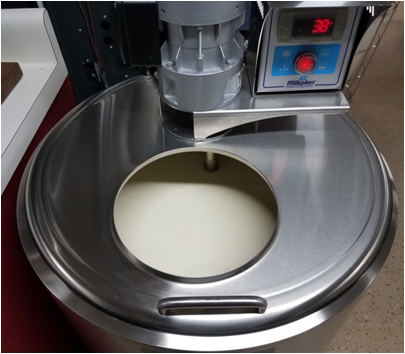
Our general recommendation is for farmers to chill their raw milk to 35-40 °F within an hour of milking.  This helps in ensuring that any bacteria present in the raw milk do not have much time in which to multiply.

Refrigerators do not generally work well for rapidly chilling raw milk.  Depending on the size of the milk jar or jug, it may take a few hours for warm milk to cool down to under 40 degrees in the refrigerator. Freezers also do not generally work well for chilling milk because the milk may freeze and break the glass jars. 

In order to achieve cold milk in a short time, other methods are needed. We work closely with dozens of farmers, and have seen that rapid milk chilling is achievable no matter the size of the farm.  Here are some of the different ways in which farmers can rapidly chill their raw milk to 35-40°F in an hour or less.  

Ice-and-Water Bath for Rapid Milk Chilling on Micro-Dairies

For small-scale farms, an ice-and-water bath can work well for milk chilling. A chest cooler can be used to hold the ice-and-water bath.  When using this method, there are a few important things to pay attention to:

  • The milk jars should be submerged in the cold ice-and-water, but make sure that the water level does not reach lid of the milk container. Otherwise, there may be problems with water comingling with the milk in the jars.

  • The size of the milk jar will make a big difference in how long it will take the milk to chill down.  We recommend that farmers use milk jars that are no larger than ½ gallon, or else the chilling time will be too lengthy.

  • Some farmers who do not have ice maker machines have preferred to use either stainless steel ice cubes (which can be sanitized in the dishwasher) or frozen water bottles which can be reused over and over again.

  • Make sure there is enough cold ice water to rapidly chill the milk.  If there are too many milk jugs in relation to the amount of ice water, then the chilling will not be quick enough.

  • Some farmers like to add in a small submersible water pump (such as an aquarium or pond pump) to circulate the water in their ice water bath for quicker chilling. 

  • Whatever method you use, you can check to see whether the milk is chilling rapidly enough by measuring the temperature in the middle of your milk jars after an hour.   

Bulk Milk Tanks

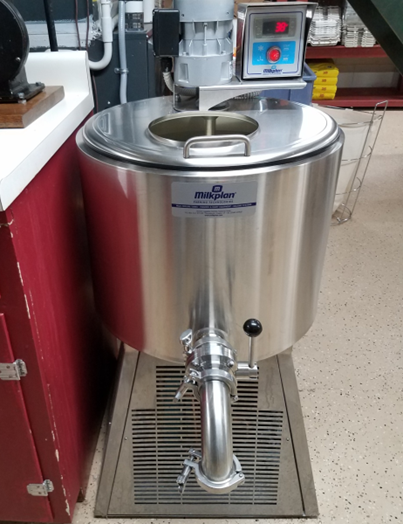
Bulk tanks are another option for milk chilling. Small bulk tanks can hold up to 15 gallons of milk, and many other sizes are available for farmers who are producing larger quantities of milk.  Bulk tanks with integrated cooling systems can quickly chill the milk to the desired temperature. When using a bulk tank, farmers need to be aware of the following:

  • Bulk tanks need to be sized appropriately, or else there can be problems with the milk freezing if there is too little quantity of milk relative to the size of the tank.

  • Milk stacking occurs when milk from multiple milkings is poured into the bulk tank. This can result in increased bacteria counts as the milk in the tank is re-warmed each time fresh milk is added.  Furthermore, milk stacking increases the risk of contamination from one batch of milk to another, thereby increasing the potential damage done by the presence of any undesirable bacteria/pathogens. We recommend that farmers minimize milk stacking by bottling their milk after every 1-3 milkings.

  • Bulk tanks must be thoroughly cleaned after each time the milk is bottled.  The valve on the bulk tank, in particular, needs to be completely disassembled and scrubbed clean to ensure that it does not harbor bacteria. 

Sophisticated Chilling for Larger Farms

Larger farms may choose to use sophisticated chilling equipment, such as plate chillers.  These chillers will cool the milk down rapidly in just a few minutes before it even enters the bulk tank.  Farmers using plate chillers need to be aware of the following:

  • Complex equipment can create more opportunities for bacteria biofilms to grow in nooks and crannies. Therefore, thorough cleaning is essential for plate chillers in between milkings.

  • A clean-in-place (CIP) system will be required for thoroughly cleaning the plate chiller.  We recommend that farmers work with a dairy supply consultant to optimize the CIP for their individual pipeline systems. This should include a tepid rinse, followed by a hot wash with alkaline detergent, followed by a warm acid rinse. 

  • The temperature of the water used for the hot alkaline wash will decrease as the water flows through the system, thereby reducing the effectiveness of the cleaning solution. It is recommended to ensure that the temperature of the wash water is at least 120 degrees at the outlet of the system.

  • Over time, bacteria biofilms can become resistant to specific cleaners, especially in pipeline systems.  Therefore, it is recommended to periodically “shock” pipeline systems by using different alkaline and acid cleaners about once a month.


Rapid Milk Chilling is Achievable

Rapid milk chilling is an important strategy for risk reduction with raw milk.  As we have described, rapid chilling is achievable no matter the size of the farm. Besides reducing the risk of high bacteria counts in the milk, rapid chilling can also result in a longer shelf-life for the milk and help in preventing off flavors. Rapid chilling is a Win-Win for both farmers and customers.


This article was published in the April 2023 issue of Graze Magazine.